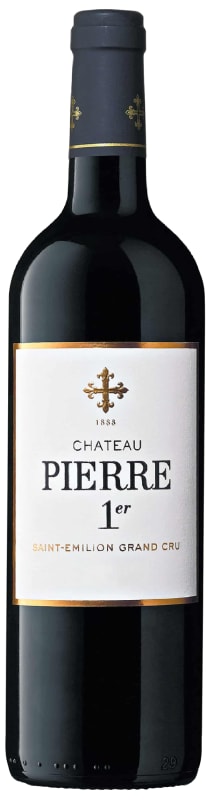


Winemaker Notes
Professional Ratings
-
James Suckling
Aromas of elderberries, cedar and licorice with a subtle citrus touch. The palate is medium- to full-bodied and concentrated, with round tannins, flavors of elderberries and cedar and a tight finish. A blend of 75% merlot and 25% cabernet franc. Better from 2027.
-
Robert Parker's Wine Advocate
A strong effort, the 2023 Saint-Pierre unwinds in the glass with aromas of cassis, dark berries and incense, framed by a deft touch of new oak. Medium to full-bodied, rich and layered, with good mid-palate density, powdery tannins and lively acids, it's a classically proportioned Saint-Julien that will age with grace. The blend is 80% Cabernet Sauvignon, 17% Merlot and 3% Petit Verdot.
Barrel Sample: 92-94 -
Vinous
The 2023 Pierre 1er is plump, juicy and super-expressive. Aromatic top notes from the Franc beautifully play off a core of dark Merlot fruit. Black cherry, mocha, spice, new leather and dried herbs build into the creamy, resonant finish. Pierre 1er is another wine that has changed dramatically in recent years. Today, there's more freshness and vibrancy, but also plenty of textural opulence. Tasted two times. –Antonio Galloni
Barrel Sample: 91-93 -
Decanter
Ripe and toasted on the nose, dark chocolate, smoke and plums. Feels quite charged but this settles with an almost salty grip to the tannins that fill the mouth but don’t overwhelm. Lots of menthol, spicy freshness throughout, a touch too much of oak right now but there’s precision too and nice purity of juicy red berry fruit. A little on the robust side, but it will find fans.
Barrel Sample: 91 -
Jeb Dunnuck
Coming from sandy soils sitting over both clay and gravel, the 2023 Château Pierre 1Er is a rock-solid Saint-Emilion with a ripe nose of black cherries, leather, asphalt, and spicy, mineral-laced notes. Based on 75% Merlot and 25% Cabernet Franc and aged 12 months in a mix of new and used barrels as well as stainless steel, it's balanced and medium-bodied on the palate, with ripe tannins and a good finish. It's drinking nicely today (as are most 2023s), yet I see no reason it shouldn't evolve gracefully over the coming 15 years or more. Drink 2026-2041.
-
Wine Spectator
Aims for ripeness, with enticing notes of raspberry and plum pâte de fruit forming the core. There’s good energy, with light iris and mesquite accents helping to frame the finish. Merlot and Cabernet Franc.


One of the world’s most classic and popular styles of red wine, Bordeaux-inspired blends have spread from their homeland in France to nearly every corner of the New World. Typically based on either Cabernet Sauvignon or Merlot and supported by Cabernet Franc, Malbec and Petit Verdot, the best of these are densely hued, fragrant, full of fruit and boast a structure that begs for cellar time. Somm Secret—Blends from Bordeaux are generally earthier compared to those from the New World, which tend to be fruit-dominant.

Marked by its historic fortified village—perhaps the prettiest in all of Bordeaux, the St-Émilion appellation, along with its neighboring village of Pomerol, are leaders in quality on the Right Bank of Bordeaux. These Merlot-dominant red wines (complemented by various amounts of Cabernet Franc and/or Cabernet Sauvignon) remain some of the most admired and collected wines of the world.
St-Émilion has the longest history in wine production in Bordeaux—longer than the Left Bank—dating back to an 8th century monk named Saint Émilion who became a hermit in one of the many limestone caves scattered throughout the area.
Today St-Émilion is made up of hundreds of independent farmers dedicated to the same thing: growing Merlot and Cabernet Franc (and tiny amounts of Cabernet Sauvignon). While always roughly the same blend, the wines of St-Émilion vary considerably depending on the soil upon which they are grown—and the soils do vary considerably throughout the region.
The chateaux with the highest classification (Premier Grand Cru Classés) are on gravel-rich soils or steep, clay-limestone hillsides. There are only four given the highest rank, called Premier Grand Cru Classés A (Chateau Cheval Blanc, Ausone, Angélus, Pavie) and 14 are Premier Grand Cru Classés B. Much of the rest of the vineyards in the appellation are on flatter land where the soils are a mix of gravel, sand and alluvial matter.
Great wines from St-Émilion will be deep in color, and might have characteristics of blackberry liqueur, black raspberry, licorice, chocolate, grilled meat, earth or truffles. They will be bold, layered and lush.