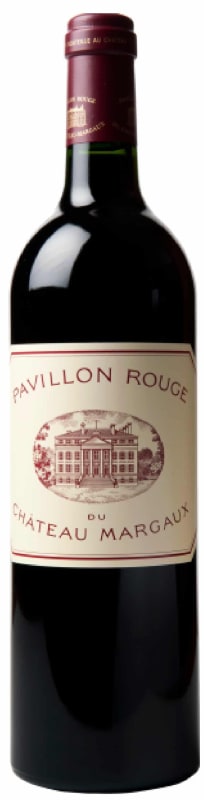


Winemaker Notes
Like Chateau Margaux, but to a lesser extent, Pavillon Rouge 2018 is powerful, silky and long, and delicately tannic throughout. Although it has the highest level of tannins of any Pavillon Rouge, there is not the slightest hint of atringency at any point in the tasting.
Blend: 69% Cabernet Sauvignon, 19% Merlot, 9% Petit Verdot
Professional Ratings
-
Jeb Dunnuck
This cuvée has been in the running for the best second wine in the vintage for a number of years now, and I think it just might be there in 2018. The 2018 Château Margaux Pavillon Rouge checks in as 69% Cabernet Sauvignon, 19% Merlot, and the rest Petit Verdot and Cabernet Franc, and it's no lightweight effort, revealing a dense purple color as well as gorgeous crème de cassis, black cherry, crushed violets, sandalwood, smoke tobacco, and incense. It's loaded with Château Margaux character, has medium to full-bodied richness, ample structure, and a great finish. I followed this bottle for multiple days and it only improved with air. Don't underestimate this second wine – it's incredibly impressive. Hide bottles for 3-5 years and enjoy over the following two decades.
-
James Suckling
Blackberry, plum, light earth and undergrowth on the nose. Citrus, too. It’s full-bodied with rich, chewy tannins that turn energetic, fine and tight on the finish. Lively acidity. Second wine of Margaux. A blend of 69% cabernet sauvignon, 19% merlot, 9% petit verdot and 3% cabernet franc. Try after 2024.
-
Wine Enthusiast
This second wine of Chateau Margaux, grand in its own right, is powerfully dense. It displays its own style and balance between rich black fruits and the acidity that shines through the structure. The wine will age well, its ripeness and concentration likely to soften as it matures. Drink from 2026.
-
Decanter
Tight, bright firm fruits, packed with finely tuned tannins, with a clear velvety texture. The highest tannin levels they have ever produced in Pavillon Rouge, close to the levels in 1996. There is an austerity to the wine right now. You get the spice of the Petit Verdot - also at the highest level to date - giving cushion and complexity to the blackberry, raspberry and bilberry fruits. Even this second wine should be given at least eight to 10 years to really soften because of these tannins, and it is set for the long term. 30% of the overall harvest in Pavillon Rouge in 2018. Bottled July 2020. 3% Cabernet Franc makes up the blend, with 13% press wine. 60% new oak ageing. Drinking Window 2026 - 2042
-
Robert Parker's Wine Advocate
The 2018 Pavillon Rouge is a blend of 69% Cabernet Sauvignon, 19% Merlot, 9% Petit Verdot and 3% Cabernet Franc, with 14.5% alcohol. Deep garnet-purple colored, it leaps from the glass with vivacious scents of chocolate-covered cherries, mulberries and blackcurrant pastilles with suggestions of bay leaves, pencil lead, tapenade and dusty soil. Medium to full-bodied, the palate has a generous amount of black fruit at the core with loads of earthy and savory accents and a soft, approachable frame, finishing long with an herbal lift. It is approachable now but should be a lot more expressive with a couple of years in bottle and drink nicely over the following 15 to 18 years or more.
-
Wine Spectator
A singed alder note frames a core of gently steeped plum and black currant flavors while smoldering tobacco, bay and warm earth hints fill in through the finish. Caressing in feel and seductive through the sneaky long finish. Cabernet Sauvignon, Merlot, Petit Verdot and Cabernet Franc. Drink now through 2034.


One of the world’s most classic and popular styles of red wine, Bordeaux-inspired blends have spread from their homeland in France to nearly every corner of the New World. Typically based on either Cabernet Sauvignon or Merlot and supported by Cabernet Franc, Malbec and Petit Verdot, the best of these are densely hued, fragrant, full of fruit and boast a structure that begs for cellar time. Somm Secret—Blends from Bordeaux are generally earthier compared to those from the New World, which tend to be fruit-dominant.

Silky, seductive and polished are the words that characterize the best wines from Margaux, the most inland appellation of the Médoc on the Left Bank of Bordeaux.
Margaux’s gravel soils are the thinnest of the Médoc, making them most penetrable by vine roots—some reaching down over 23 feet for water. The best sites are said to be on gentle outcrops, or croupes, where more gravel facilitates good drainage.
The Left Bank of Bordeaux subscribes to an arguably outdated method of classification but it is nonetheless important in regards to history of the area. In 1855 the finest chateaux were deemed on the basis of reputation and trading price—at that time. In 1855, Chateau Margaux achieved first growth status, yet it has been Chateau Palmer (officially third growth from the 1855 classification) that has consistently outperformed others throughout the 20th century.
Chateau Margaux in top vintages is capable of producing red Cabernet Sauvignon based wines described as pure, intense, spell-binding, refined and profound with flavors and aromas of black currant, violets, roses, orange peel, black tea and incense.
Other top producers worthy of noting include Chateau Rauzan-Ségla, Lascombes, Brane-Cantenac, and d’Issan, among others.
The best wines of Margaux combine a deep ruby color with a polished structure, concentration and an unrivaled elegance.