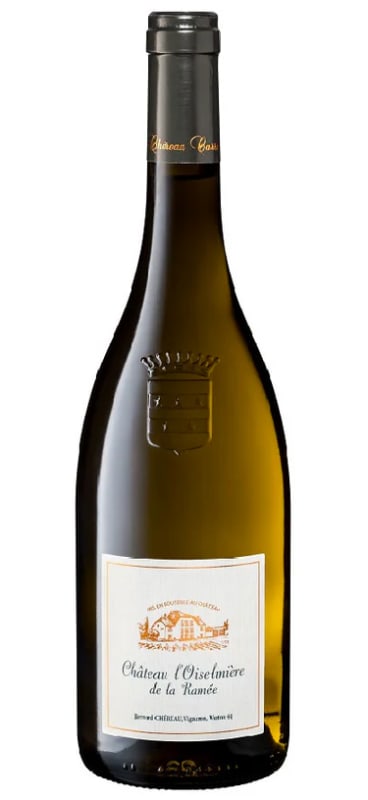


Winemaker Notes
All the melon de bourgogne vines (planted between 1940 and 1980) are picked by hand. After fermentation with selected indigenous yeasts in temperature-controlled stainless steel tanks, the wine is aged for six months sur lie in underground concrete vats with regular bâtonnage, followed by 12 months aging in bottle before release.


Made famous in Muscadet, a gently rolling, Atlantic-dominated countryside on the eastern edge of the Loire, Melon de Bourgogne is actually the most planted grape variety in the Loire Valley. But the best comes from Muscadet Sèvre et Maine, a subzone of Pays Nantais. Somm Secret—The wine called Muscadet may sound suggestive of “muscat,” but Melon de Bourgogne is not related. Its name also suggests origins in Burgundy, which it has, but was continuously outlawed there, like Gamay, during the 16th and 17th centuries.

The Pays Nantais, Loire’s only region abutting the Atlantic coast, is solely focused on the Melon de Bourgogne grape in its handful of subzones: Muscadet-Sèvre et Maine, Muscadet-Coteaux de la Loire and Muscadet-Côtes de Grandlieu. Muscadet wines are dry, crisp, seaside whites made from Melon de Bourgogne and are ideal for the local seafood-focused cuisine. (They are not related to Muscat.) There is a new shift in the region to make these wines with extended lees contact, creating fleshy and more aromatic versions.