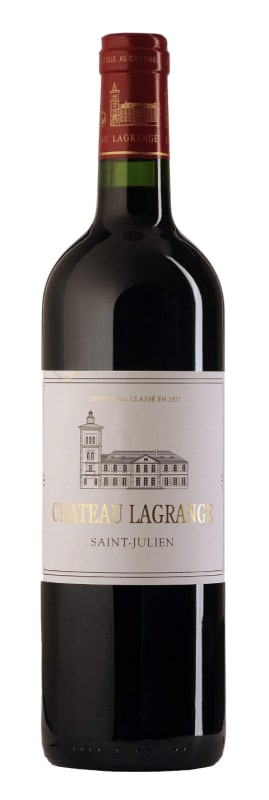


Winemaker Notes
Blackcurrant and black cherry notes with spicy and smoky nuances. Over the years, it also develops notes of cedar, licorice and even tobacco, typical of the great wines of Saint-Julien.
Blend: 84% Cabernet Sauvignon, 16% Merlot
Professional Ratings
-
Decanter
Another great vintage from Lagrange. Strongly scented, lots of Cabernet markers, liquorice, toast, cedar, tobacco, some dark chocolate and dark bramble fruit - blackcurrants and blueberries with perfumed accents too. Smooth and supple, almost velvety on the palate, this has a thickness of fine tannins, and plump fruit with a great juiciness. A touch of bitterness on the finish - some iodine notes, oyster shell salinity and some oak toast. I like the plump, almost fleshy aspect, balancing the acidity with a hint of sweetness.
Barrel Sample: 95 -
Jeb Dunnuck
A serious and impeccably made wine, the 2023 Château Lagrange is cut from the same cloth as the Les Fiefs yet has more of everything. Pure crème de cassis, graphite, spicy wood, and assorted floral nuances all shine on the nose, and it's medium to full-bodied on the palate, with a layered, graceful mouthfeel and polished tannins. Based on 84% Cabernet Sauvignon and 16% Merlot and aged 21 months in 50% new barrels with the balance in second-fill oak, this is a classic, beautifully done Saint-Julien that will keep for 20-30 years. Tasted multiple times with consistent notes.
-
James Suckling
Very good, showing defined minerals and just a touch of sweet spices to the vibrant red and black cherries. Quite bright and precise, with fine, chalky tannins and a long but pristine finish. Such poise, transparency and purity of fruit. Tense, tactile and tightly knit. Certainly nothing heavy here. A blend of 84% cabernet sauvignon and 16% merlot.
-
Robert Parker's Wine Advocate
The 2023 Lagrange has turned out very well in bottle, opening in the glass with notes of cherries, mulberries and violets, framed by nicely integrated new oak. Medium- to full-bodied, rich and layered, with a charming core of fruit, powdery tannins and lively acids, this is a strong effort from this Saint-Julien property.
-
Vinous
The 2023 Lagrange contains no Petit Verdot this year. Matured in 60% new oak, the aromatics demand a bit of coaxing in the glass, eventually revealing blackberry and cedar aromas and just a touch of graphite, quite strict and focused. The palate is medium-bodied with very pliant tannins on the entry, ensuring that this will be an approachable Lagrange. Pure-fruited and gently grippy, there is admirable depth to this Saint-Julien, revealing just a hint of brine toward the saline finish. This is a "solid" wine, if perhaps without the flair of the 2022. It will require four or five years in bottle but should drink well for the next 20 years or more. –Neal Martin
Barrel Sample: 91-93 -
Wine Spectator
This is stylish, offering a pretty cascade of boysenberry and blackberry puree that glides through, with a silky structure, though a graphite underpinning is buried. Anise, black tea and a flash of cast iron emerge through the focused finish. Cabernet Sauvignon, Merlot and Petit Verdot.
-
Wilfred Wong of Wine.com
Through decades of drinking pleasure, I have consistently been rewarded when opening a bottle of Château Branaire-Ducru. The 2023 vintage is fragrant and smooth, offering ripe red and black fruit aromas that unfold with poise and clarity. On the palate, the wine remains focused and precise, finishing with firm, polished tannins that underscore its classic Saint-Julien character. Pair this wine with a traditional Médoc-style preparation of pork loin, roasted with garlic, thyme, and shallots, finished with a light pan sauce in which the savory herbs and gentle richness echo the wine’s structure and purity. (Tasted: January 22, 2026, San Francisco, CA)


One of the world’s most classic and popular styles of red wine, Bordeaux-inspired blends have spread from their homeland in France to nearly every corner of the New World. Typically based on either Cabernet Sauvignon or Merlot and supported by Cabernet Franc, Malbec and Petit Verdot, the best of these are densely hued, fragrant, full of fruit and boast a structure that begs for cellar time. Somm Secret—Blends from Bordeaux are generally earthier compared to those from the New World, which tend to be fruit-dominant.

An icon of balance and tradition, St. Julien boasts the highest proportion of classed growths in the Médoc. What it lacks in any first growths, it makes up in the rest: five amazing second growth chateaux, two superb third growths and four well-reputed fourth growths. While the actual class rankings set in 1855 (first, second, and so on the fifth) today do not necessarily indicate a score of quality, the classification system is important to understand in the context of Bordeaux history. Today rivalry among the classed chateaux only serves to elevate the appellation overall.
One of its best historically, the estate of Leoville, was the largest in the Médoc in the 18th century, before it was divided into the three second growths known today as Chateau Léoville-Las-Cases, Léoville-Poyferré and Léoville-Barton. Located in the north section, these are stone’s throw from Chateau Latour in Pauillac and share much in common with that well-esteemed estate.
The relatively homogeneous gravelly and rocky top soil on top of clay-limestone subsoil is broken only by a narrow strip of bank on either side of the “jalle,” or stream, that bisects the zone and flows into the Gironde.
St. Julien wines are for those wanting subtlety, balance and consistency in their Bordeaux. Rewarding and persistent, the best among these Bordeaux Blends are full of blueberry, blackberry, cassis, plum, tobacco and licorice. They are intense and complex and finish with fine, velvety tannins.