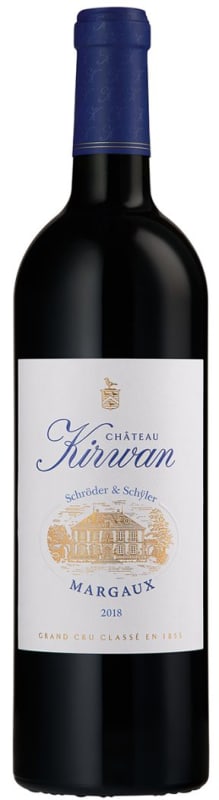


Winemaker Notes
Château Kirwan is a wine that is produced from the best parcels of the vineyard that have mainly gravel soils, but some are also clay. The fruit is picked and sorted twice by hand, then vinified in separate batches corresponding to individual vineyard parcels. Half the oak barrels used to age the wine for eighteen months are renewed every year.
Professional Ratings
-
Jeb Dunnuck
A blend of 65% Cabernet Sauvignon, 23% Merlot, 5% Cabernet Franc, 6% Petit Verdot, and 1% Carménère aged 18 months in 50% new barrels, the 2023 Château Kirwan is a solid Margaux with a deep purple hue and a juicy nose of red, blue, and black fruits intermixed with smoky tobacco, minty herbs, and spicy wood. On the palate, it's pretty, balanced, and elegant, already offering plenty of pleasure yet built to evolve gracefully. I love its purity of fruit.
-
James Suckling
Solid, showing fine spices, white pepper and a touch of minerals to the fresh cassis and berries. Cohesive and almost chalky, with medium body and a long, linear finish. Juicy, precise and pristine. 65% cabernet sauvignon, 23% merlot, 5% cabernet franc, 6% petit verdot and 1% carmenere. Will age well in the next 10 to 15 years. Drink or hold.
-
Vinous
The 2023 Kirwan is dense, resonant and impeccably balanced. Succulent dark cherry, plum, licorice, menthol, spice and lavender are all dialed up in this decidedly intense Margaux. Kirwan packs quite the punch, but it is also neatly proportioned, not to mention incredibly delicious. –Antonio Galloni
Barrel Sample: 92-94 -
Wilfred Wong of Wine.com
Château Kirwan has long stood among the appellation’s marquee producers, and I’ve enjoyed its wines across many vintages. The 2023 comes through exactly as hoped, offering layers of aromatic spice and beautifully persistent red fruits carried on a supple, finely tuned palate. Notes of clove, allspice, and gentle Médoc herbs add dimension, making it a superb companion to savory rotisserie chicken rubbed with garlic, paprika, thyme, cracked pepper, and a hint of cumin. The pairing brings out the wine’s warmth, elegance, and lingering finish. (Tasted: January 22, 2026, San Francisco, CA)
-
Decanter
As a Margaux should, this wine releases lovely floral aromatics, more rose stem, along with cedar, caraway, liquorice and subtle touches of oak-derived toast. I like the palate freshness combined with juiciness and subtle depth, with floral echoes on the medium+ finish. It does seem just a touch thinner as compared to some of its cru classé peers, but the élevage should broaden the palate.
Barrel Sample: 93 -
Wine Spectator
This is ripe and fresh, with a laid-back feel, as the silky structure lets gently mulled plum and black cherry fruit splay out slowly, unveiling violet and ink notes through the finish. Cabernet Sauvignon, Merlot, Petit Verdot and Cabernet Franc.


One of the world’s most classic and popular styles of red wine, Bordeaux-inspired blends have spread from their homeland in France to nearly every corner of the New World. Typically based on either Cabernet Sauvignon or Merlot and supported by Cabernet Franc, Malbec and Petit Verdot, the best of these are densely hued, fragrant, full of fruit and boast a structure that begs for cellar time. Somm Secret—Blends from Bordeaux are generally earthier compared to those from the New World, which tend to be fruit-dominant.

Silky, seductive and polished are the words that characterize the best wines from Margaux, the most inland appellation of the Médoc on the Left Bank of Bordeaux.
Margaux’s gravel soils are the thinnest of the Médoc, making them most penetrable by vine roots—some reaching down over 23 feet for water. The best sites are said to be on gentle outcrops, or croupes, where more gravel facilitates good drainage.
The Left Bank of Bordeaux subscribes to an arguably outdated method of classification but it is nonetheless important in regards to history of the area. In 1855 the finest chateaux were deemed on the basis of reputation and trading price—at that time. In 1855, Chateau Margaux achieved first growth status, yet it has been Chateau Palmer (officially third growth from the 1855 classification) that has consistently outperformed others throughout the 20th century.
Chateau Margaux in top vintages is capable of producing red Cabernet Sauvignon based wines described as pure, intense, spell-binding, refined and profound with flavors and aromas of black currant, violets, roses, orange peel, black tea and incense.
Other top producers worthy of noting include Chateau Rauzan-Ségla, Lascombes, Brane-Cantenac, and d’Issan, among others.
The best wines of Margaux combine a deep ruby color with a polished structure, concentration and an unrivaled elegance.