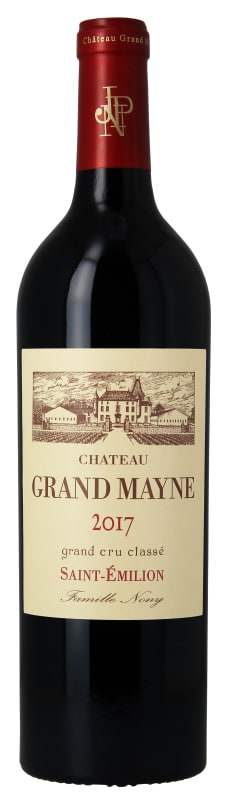


Winemaker Notes
Blend: 85% Merlot, 13% Cabernet Franc, 2% Cabernet Sauvignon
Professional Ratings
-
Wine Spectator
Well-focused, with bright raspberry, plum and red licorice notes racing along, set against a backdrop of brambly structure.
Barrel Sample: 89-92 -
Robert Parker's Wine Advocate
The 2017 Grand Mayne is deep garnet-purple in color and offers up notions of cassis, red currant jelly and plum preserves with hints of cigar box and incense. Medium to full-bodied, it has a solid backbone of firm, grainy tannins and just enough freshness, finishing long and spicy.
Barrel Sample: 89-91+ -
Jeb Dunnuck
Showing well, the 2017 Chateau Grand Mayne reveals a more ruby/purple color as well as complex notes of savory red and black fruits, sandalwood, flowery incense, and spice. With some background oak, medium to full body, and present tannins, it's going to benefit from 3-4 years of bottle age and keep for 10-15 years or more.
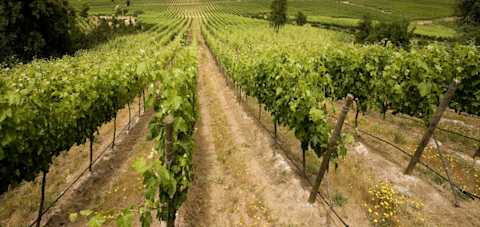

One of the world’s most classic and popular styles of red wine, Bordeaux-inspired blends have spread from their homeland in France to nearly every corner of the New World. Typically based on either Cabernet Sauvignon or Merlot and supported by Cabernet Franc, Malbec and Petit Verdot, the best of these are densely hued, fragrant, full of fruit and boast a structure that begs for cellar time. Somm Secret—Blends from Bordeaux are generally earthier compared to those from the New World, which tend to be fruit-dominant.

Marked by its historic fortified village—perhaps the prettiest in all of Bordeaux, the St-Émilion appellation, along with its neighboring village of Pomerol, are leaders in quality on the Right Bank of Bordeaux. These Merlot-dominant red wines (complemented by various amounts of Cabernet Franc and/or Cabernet Sauvignon) remain some of the most admired and collected wines of the world.
St-Émilion has the longest history in wine production in Bordeaux—longer than the Left Bank—dating back to an 8th century monk named Saint Émilion who became a hermit in one of the many limestone caves scattered throughout the area.
Today St-Émilion is made up of hundreds of independent farmers dedicated to the same thing: growing Merlot and Cabernet Franc (and tiny amounts of Cabernet Sauvignon). While always roughly the same blend, the wines of St-Émilion vary considerably depending on the soil upon which they are grown—and the soils do vary considerably throughout the region.
The chateaux with the highest classification (Premier Grand Cru Classés) are on gravel-rich soils or steep, clay-limestone hillsides. There are only four given the highest rank, called Premier Grand Cru Classés A (Chateau Cheval Blanc, Ausone, Angélus, Pavie) and 14 are Premier Grand Cru Classés B. Much of the rest of the vineyards in the appellation are on flatter land where the soils are a mix of gravel, sand and alluvial matter.
Great wines from St-Émilion will be deep in color, and might have characteristics of blackberry liqueur, black raspberry, licorice, chocolate, grilled meat, earth or truffles. They will be bold, layered and lush.