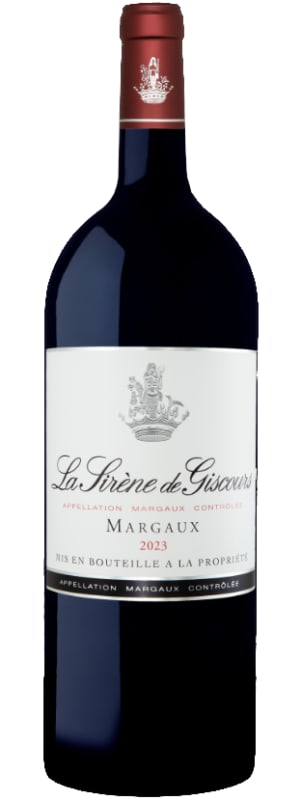


Winemaker Notes
With great elegance, La Sirène de Ciscours 2023 emancipates itself from the grand vin while sharing its noble and refined lineage, thus asserting its unique identity within the Giscours family.
Blend: 64% Cabernet Sauvignon, 24% Merlot, 12% Petit Verdot
Professional Ratings
-
Wine Spectator
The 2023 La Sirène de Giscours is a gorgeous second wine. Dark, savory and super finessed, the 2023 exudes class from start to finish. Lavender, dried herbs, menthol, licorice and mocha are all finely sculpted in a mid-weight Margaux that delivers the goods. All the elements are so well balanced. The 2023 spent 12 months in French oak barrels, 30% new.
-
James Suckling
Aromas of crunchy dark fruit, elderberries, herbs, eucalyptus and dried flowers. Medium- to full-bodied with ripe, fine-grained tannins that turn focused in the delineated and precise finish. 64% cabernet sauvignon, 24% merlot and 12% petit verdot. Approachable now, but will benefit from a couple of years of cellaring. Drink or hold.
-
Wine Enthusiast
Bold and ripe, this is the second wine of classed growth Château Giscours. It is balanced with juicy black currant flavors and a blackberry aroma, with tannins to match. The wine will be ready from 2028.
-
Jeb Dunnuck
A beautiful second wine from the château, the 2023 La Sirène De Giscours is based on 64% Cabernet Sauvignon, 24% Merlot, and 12% Petit Verdot and was aged in 50% new French oak. It brings more elegance and voluptuousness compared to the Haut-Médoc and offers red and black fruits, medium body, and a ripe, round, layered, almost velvety mouthfeel. With ripe tannins and a great finish, it's hard to resist today, but it’s going to have 15-20 years of prime drinking if well stored. Drink 2026-2045.
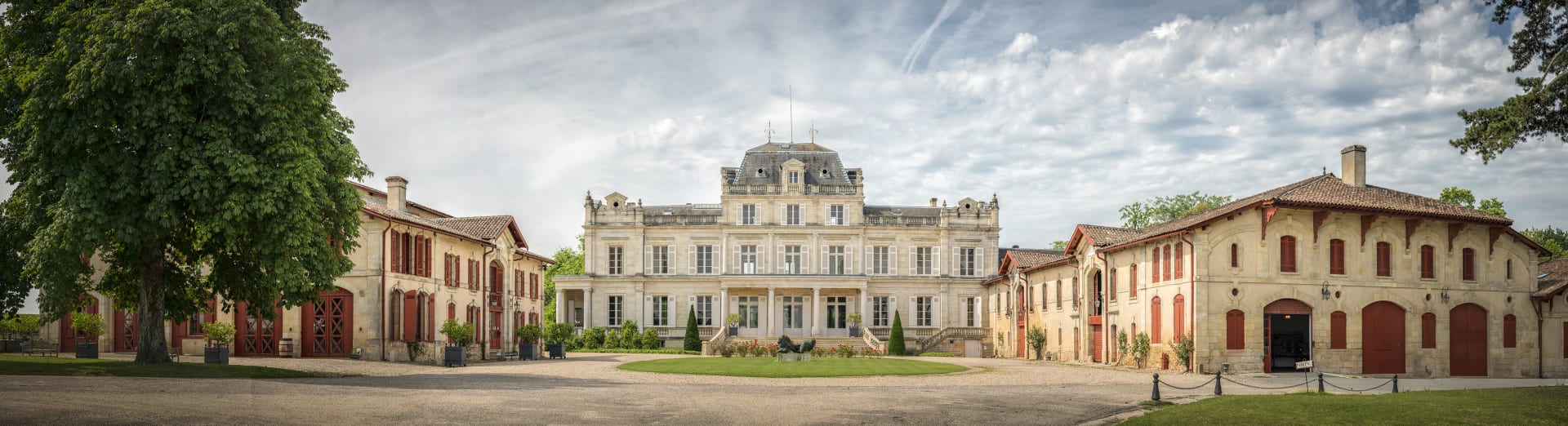



Château Giscours, a Grand Cru Classé, is one of the very few estates with vineyards planted in a single stretch, at the heart of an unspoiled ecosystem of 400 hectares of meadows and forest. The 100-hectare estate in the Margaux appellation boasts an ideal location on the magnificent Labarde and Arsac plateau.
Château Giscours, one of the oldest seigneuries in the Médoc, has reinvented itself constantly over the centuries. Pierre de Lhomme, Marc Promis, Jean-Pierre Pescatore, Edouard Cruse and Nicolas Tari were all ambitious and visionary estate owners who were passionate about pulling together the estate's land and giving this vineyard a reputation for excellence. These efforts were rewarded by the official classification in 1855, when Giscours was named a third Grand Cru Classé.
In 1995, a new chapter began with Dutch businessman Eric Albada Jelgersma, who oversaw a meticulous rehabilitation of the vineyards and buildings. It took a lengthy process, patience, and unfailing technical and commercial organization for Giscours to retain a strong identity and become the embodiment of a flourishing estate that has successfully transcended change.
Today, his children are following in their father's footsteps as they enable the estate to develop whilst also preserving its rich ecosystem.
This well-arranged land is a winemaker's dream. Deep Garonne gravel hilltops with slight variations give Giscours wines their structure and elegance. This exceptional terroir suits our vines, which offer up the best of themselves under the influence of the oceanic climate.

One of the world’s most classic and popular styles of red wine, Bordeaux-inspired blends have spread from their homeland in France to nearly every corner of the New World. Typically based on either Cabernet Sauvignon or Merlot and supported by Cabernet Franc, Malbec and Petit Verdot, the best of these are densely hued, fragrant, full of fruit and boast a structure that begs for cellar time. Somm Secret—Blends from Bordeaux are generally earthier compared to those from the New World, which tend to be fruit-dominant.

While it claims the same basic landscape as the Medoc—only every so slightly elevated above river level—the Haut Medoc is home to all of the magnificent chateaux of the Left Bank of Bordeaux, creating no lack of beautiful sites to see.
These chateaux, residing over the classed-growth cru in the villages of Margaux, Moulis, Listrac, St-Julien, Pauillac and St. Estephe are within the Haut Medoc appellation. Though within the confines of these villages, any classed-growth chateaux will most certainly claim village or cru status on their wine labels.
Interestingly, some classed-growth cru of the Haut Medoc fall outside of these more famous villages and can certainly be a source of some of the best values in Bordeaux. Deep in color, and concentrated in ripe fruit and tannins, these wines (typically Cabernet Sauvignon-based) often prove the same aging potential of the village classed-growths. Among these, the highest ranked chateaux are Chateau La Lagune and Chateau Cantemerle.