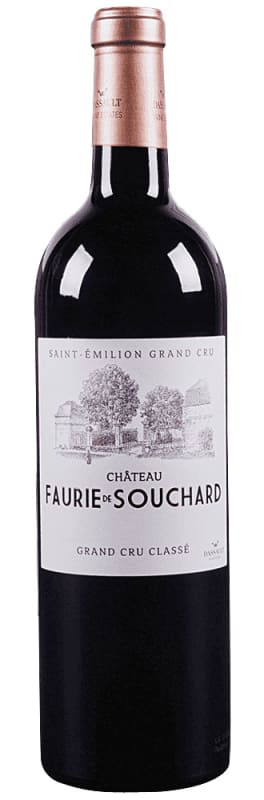


Winemaker Notes
Professional Ratings
-
Jeb Dunnuck
The 2016 Château Faurie de Souchard is another terrific wine from the Dassult team. A deep purple/ruby color is followed by a ripe, slightly modern styled beauty that has loads of cassis and black raspberry fruit, a full-bodied, seamless mouthfeel, ripe tannins, and the purity of fruit and balance that makes this vintage so compelling. It shows more spice and floral notes with time in the glass, has beautifully integrated oak, and the depth and length to cruise for two decades. This cuvée is 70% Merlot, 25% Cabernet Franc, and the rest Cabernet Sauvignon, aged in 75% new oak, with the balance in once-used barrels.
-
James Suckling
There’s a wealth of ripe and rich dark plums and berries on offer here with a regal array of plush, velvety tannins that have great length and power. Precision and balance. Certainly among the best wines in 2016.
-
Robert Parker's Wine Advocate
Medium to deep garnet-purple in color, the 2016 Faurie de Souchard reveals crushed raspberries, warm red and black cherries and chocolate box scents with hints of wood smoke, tilled soil and dried herbs. Medium-bodied and wonderfully elegant in the mouth, it has exquisitely ripe tannins and just enough freshness to support the delicate flavors, finishing perfumed.
Rating: 93+ -
Wine Enthusiast
This 19-acre estate is close to the city of Saint-Émilion, next door to Château Soutard of which it once formed a part. The latest release is rich and concentrated, with solid dark tannins as well as blackberry fruitiness. Its structure and richness promise good aging. Drink from 2022.
Cellar Selection

One of the world’s most classic and popular styles of red wine, Bordeaux-inspired blends have spread from their homeland in France to nearly every corner of the New World. Typically based on either Cabernet Sauvignon or Merlot and supported by Cabernet Franc, Malbec and Petit Verdot, the best of these are densely hued, fragrant, full of fruit and boast a structure that begs for cellar time. Somm Secret—Blends from Bordeaux are generally earthier compared to those from the New World, which tend to be fruit-dominant.

Marked by its historic fortified village—perhaps the prettiest in all of Bordeaux, the St-Émilion appellation, along with its neighboring village of Pomerol, are leaders in quality on the Right Bank of Bordeaux. These Merlot-dominant red wines (complemented by various amounts of Cabernet Franc and/or Cabernet Sauvignon) remain some of the most admired and collected wines of the world.
St-Émilion has the longest history in wine production in Bordeaux—longer than the Left Bank—dating back to an 8th century monk named Saint Émilion who became a hermit in one of the many limestone caves scattered throughout the area.
Today St-Émilion is made up of hundreds of independent farmers dedicated to the same thing: growing Merlot and Cabernet Franc (and tiny amounts of Cabernet Sauvignon). While always roughly the same blend, the wines of St-Émilion vary considerably depending on the soil upon which they are grown—and the soils do vary considerably throughout the region.
The chateaux with the highest classification (Premier Grand Cru Classés) are on gravel-rich soils or steep, clay-limestone hillsides. There are only four given the highest rank, called Premier Grand Cru Classés A (Chateau Cheval Blanc, Ausone, Angélus, Pavie) and 14 are Premier Grand Cru Classés B. Much of the rest of the vineyards in the appellation are on flatter land where the soils are a mix of gravel, sand and alluvial matter.
Great wines from St-Émilion will be deep in color, and might have characteristics of blackberry liqueur, black raspberry, licorice, chocolate, grilled meat, earth or truffles. They will be bold, layered and lush.