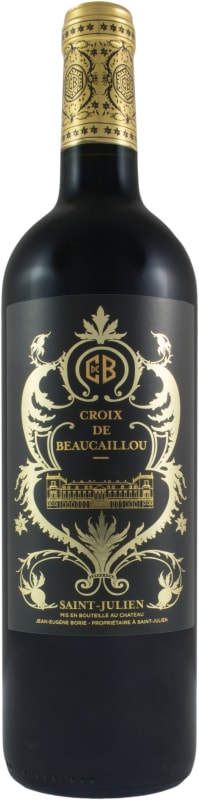


Winemaker Notes
Professional Ratings
-
Wine Enthusiast
Velvet tannins are allied with powerful fruit to create a rich wine with signs of the wood aging that smooth it further. It will be a generous wine that will keep its fine fruitiness for many years. Barrel Sample: 93-95 points
-
James Suckling
A juicy and savory second wine from Ducru with lots of ripe fruit and spice character. Chocolate and walnut undertones. Full body, velvety tannins and a fresh finish. Barrel Sample: 93-94
-
Robert Parker's Wine Advocate
The 2015 La Croix de Beaucaillou is a blend of 52% Cabernet Sauvignon, 45% Merlot and 3% Petit Verdot. It has a floral note on the nose: small black cherries, blueberry and wilted violets, the last becoming more intense as the initially tight-fisted wine opens in the glass. The palate is medium-bodied with fine-grained tannin. There is very well-judged acidity and its texture is harmonious and silky smooth. The quality is loaded more in the mouth than on the nose at the moment, but it is a seriously classy "deuxième vin" that just needs a little more persistence on the finish. Barrel Sample: 91-93
-
Decanter
Smooth, classy black fruits – a very polished wine from a separate vineyard with no young vines. Excitingly expressive and will develop very well. Barrel Sample
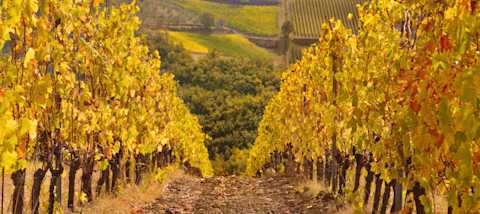

One of the world’s most classic and popular styles of red wine, Bordeaux-inspired blends have spread from their homeland in France to nearly every corner of the New World. Typically based on either Cabernet Sauvignon or Merlot and supported by Cabernet Franc, Malbec and Petit Verdot, the best of these are densely hued, fragrant, full of fruit and boast a structure that begs for cellar time. Somm Secret—Blends from Bordeaux are generally earthier compared to those from the New World, which tend to be fruit-dominant.

An icon of balance and tradition, St. Julien boasts the highest proportion of classed growths in the Médoc. What it lacks in any first growths, it makes up in the rest: five amazing second growth chateaux, two superb third growths and four well-reputed fourth growths. While the actual class rankings set in 1855 (first, second, and so on the fifth) today do not necessarily indicate a score of quality, the classification system is important to understand in the context of Bordeaux history. Today rivalry among the classed chateaux only serves to elevate the appellation overall.
One of its best historically, the estate of Leoville, was the largest in the Médoc in the 18th century, before it was divided into the three second growths known today as Chateau Léoville-Las-Cases, Léoville-Poyferré and Léoville-Barton. Located in the north section, these are stone’s throw from Chateau Latour in Pauillac and share much in common with that well-esteemed estate.
The relatively homogeneous gravelly and rocky top soil on top of clay-limestone subsoil is broken only by a narrow strip of bank on either side of the “jalle,” or stream, that bisects the zone and flows into the Gironde.
St. Julien wines are for those wanting subtlety, balance and consistency in their Bordeaux. Rewarding and persistent, the best among these Bordeaux Blends are full of blueberry, blackberry, cassis, plum, tobacco and licorice. They are intense and complex and finish with fine, velvety tannins.