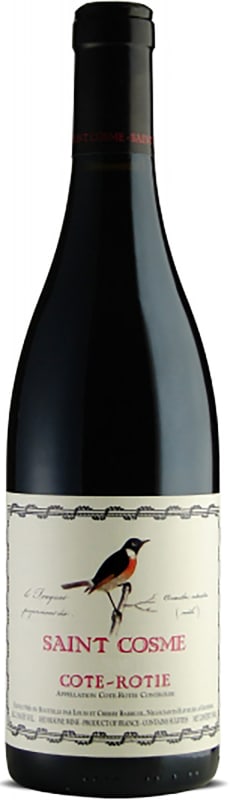


Winemaker Notes
Syrah, with its deep flavors and firm tannins, is a natural match for grilled or smoked meat and dishes featuring herbs, roasted mushrooms, and onions. Seared venison or beef with black pepper and thyme or a Moroccan tagine of pigeon or chicken are complimented by the spicy characteristic of Syrah.
Professional Ratings
-
Jeb Dunnuck
The 2016 Côte-Rôtie comes all from the Côte Brune side of the appellation, which is all schist soils. Fermented with no destemming and aged mostly in older barrels, it’s a rock star Côte-Rôtie and offers loads of blackberry fruits, spice, tapenade, cured meats, and pepper. With medium to full body, a deep, layered mid-palate, present tannins, and a huge finish, it needs short-term cellaring but is an undeniably gorgeous Syrah that will have two decades of longevity.
-
James Suckling
Ripe, dark, raspberries and strawberries with toasted spices. This has a more modern edge and a heap of perfume with wild herbs. Fine and elegant tannins are steeped in a wealth of rich fruit and wild herbs that infuse the fresh, lively finish. From organically grown grapes.
-
Robert Parker's Wine Advocate
A blend of Syrah from the lieux-dits of le Plomb, Besset, la Viallière and Neve, Saint Cosme's 2016 Cote Rotie was fermented using whole clusters and aged in (mostly) used barrels. It's a sexy, supple Côte Rôtie, with notes of hickory smoke, wood ash and bacon balanced by lush dark-fruit flavors. Slurp it down it over the next 7-8 years while waiting for some of the more tannic examples of the appellation to mature.
-
Wine Spectator
Dark plum and blackberry fruit takes on a lightly mulled edge while anise, roasted apple wood and racy bay leaf notes fill in the background, adding cut and drive. Youthfully vibrant and balanced for the cellar. Best from 2020 through 2035.


Chateau de Saint Cosme is the leading estate of Gigondas and produces the appellation’s benchmark wines. Wine has been produced on the site of Saint Cosme since Roman times, evident by the ancient Gallo-Roman vats carved into the limestone below the chateau. The property has been in the hands of Louis Barruol’s family since 1570. Henri and Claude Barruol took over in 1957 and gradually moved Saint Cosme away from the bulk wine business. Henri was one of the first in the region to work organically beginning in the 1970s. Louis Barruol took over from his father in 1992, making a dramatic shift to quality, adding a négociant arm to the business in 1997, and converting to biodynamics in 2010.

Marked by an unmistakable deep purple hue and savory aromatics, Syrah makes an intense, powerful and often age-worthy red. Native to the Northern Rhône, Syrah achieves its maximum potential in the steep village of Hermitage and plays an important component in the Red Rhône Blends of the south, adding color and structure to Grenache and Mourvèdre. Syrah is the most widely planted grape of Australia and is important in California and Washington. Sommelier Secret—Such a synergy these three create together, the Grenache, Syrah, Mourvedre trio often takes on the shorthand term, “GSM.”

The cultivation of vines here began with Greek settlers who arrived in 600 BC. Its proximity to Vienne was important then and also when that city became a Roman settlement but its situation, far from the negociants of Tain, led to its decline in more modern history. However the 1990s brought with it a revival fueled by one producer, Marcel Guigal, who believed in the zone’s potential. He, along with the critic, Robert Parker, are said to be responsible for the zone’s later 20th century renaissance.
Where the Rhone River turns, there is a build up of schist rock and a remarkable angle that produces slopes to maximize the rays of the sun. Cote Rotie remains one of the steepest in viticultural France. Its varied slopes have two designations. Some are dedicated as Côte Blonde and others as Côte Brune. Syrahs coming from Côte Blonde are lighter, more floral, and ready for earlier consumption—they can also include up to 20% of the highly scented Viognier. Those from Côte Brune are more sturdy, age-worthy and are typically nearly 100% Syrah. Either way, a Cote Rotie is going to have a particularly haunting and savory perfume, expressing a more feminine side of the northern Rhone.