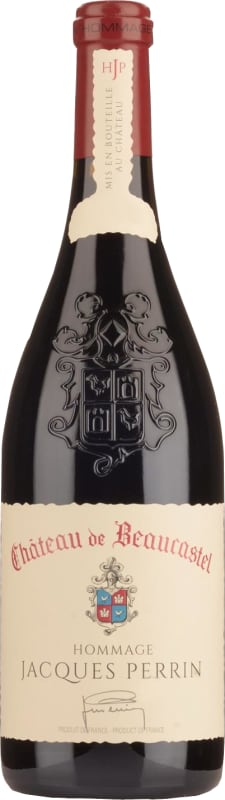


Winemaker Notes
Professional Ratings
-
James Suckling
Enveloping nose of super-ripe orange, pomegranate and cigar leaf that’s still very youthful and needs time to reveal its myriad nuances. Also notes of licorice, dried herbs and rose petals. Enormous concentration, silkiness and finesse on the expansive palate. Extravagant in the best sense of that word! The finish gets finer, the closer it gets to infinity.
-
Robert Parker's Wine Advocate
Tasted from foudre, the 2020 Chateauneuf du Pape Hommage à Jacques Perrin is approximately 60% Mourvèdre (from the same parcel, year after year), with the balance a blend of Grenache, Syrah and Counoise. Ripe plums and truffle-like notes mark the nose, while the palate is full-bodied and rich, with a long, velvety finish. Showing even more complexity and length than the regular bottling, there's a chance this could reach a triple-digit score down the road. Best after 2025. Barrel Sample: 97-99
-
Decanter
Closed for now, but very Mourvèdre in style: dense, dark and brooding. Great intensity but not as tannic as some vintages, showing lovely acidity, freshness and purity. This is a classic, compact and fresh style of Hommage, with great energy, plus endless length and depth. Around 60% of the blend comes from old vine Mourvèdre from their Courrieux vineyard. Grapes are destemmed, fermented in tronconic wooden vats using natural yeasts after a brief cold maceration, with regular punching down.
-
Wine Spectator
Aromatic beauty meets textural purity in this standout, powerful red. Offers an enchanting mix of violet, plum and black berry flavors matched by base notes of mulling spices, iron and singed earth. This has an appealing chewiness to the rich texture, with smoky sanguine character humming throughout. One for the cellar. Mourvèdre, Grenache, Counoise and Syrah.
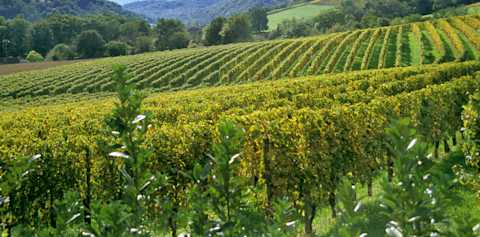
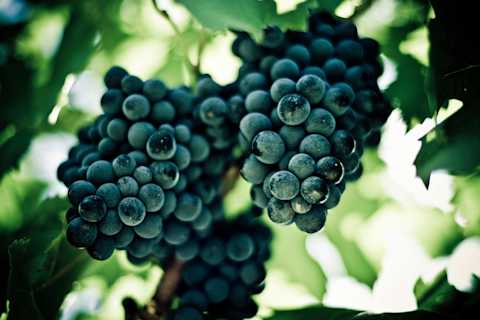
With bold fruit flavors and accents of sweet spice, Grenache, Syrah and Mourvèdre form the base of the classic Rhône Red Blend, while Carignan, Cinsault and Counoise often come in to play. Though they originated from France’s southern Rhône Valley, with some creative interpretation, Rhône blends have also become popular in other countries. Somm Secret—Putting their own local spin on the Rhône Red Blend, those from Priorat often include Merlot and Cabernet Sauvignon. In California, it is not uncommon to see Petite Sirah make an appearance.

Famous for its full-bodied, seductive and spicy reds with flavor and aroma characteristics reminiscent of black cherry, baked raspberry, garrigue, olive tapenade, lavender and baking spice, Châteauneuf-du-Pape is the leading sub-appellation of the southern Rhône River Valley. Large pebbles resembling river rocks, called "galets" in French, dominate most of the terrain. The stones hold heat and reflect it back up to the low-lying gobelet-trained vines. Though the galets are typical, they are not prominent in every vineyard. Chateau Rayas is the most obvious deviation with very sandy soil.
According to law, eighteen grape varieties are allowed in Châteauneuf-du-Pape and most wines are blends of some mix of these. For reds, Grenache is the star player with Mourvedre and Syrah coming typically second. Others used include Cinsault, Counoise and occasionally Muscardin, Vaccarèse, Picquepoul Noir and Terret Noir.
Only about 6-7% of wine from Châteauneuf-du-Pape is white wine. Blends and single-varietal bottlings are typically based on the soft and floral Grenache Blanc but Clairette, Bourboulenc and Roussanne are grown with some significance.
The wine of Chateauneuf-du-Pape takes its name from the relocation of the papal court to Avignon. The lore says that after moving in 1309, Pope Clément V (after whom Chateau Pape-Clément in Pessac-Léognan is named) ordered that vines were planted. But it was actually his successor, John XXII, who established the vineyards. The name however, Chateauneuf-du-Pape, translated as "the pope's new castle," didn’t really stick until the 19th century.