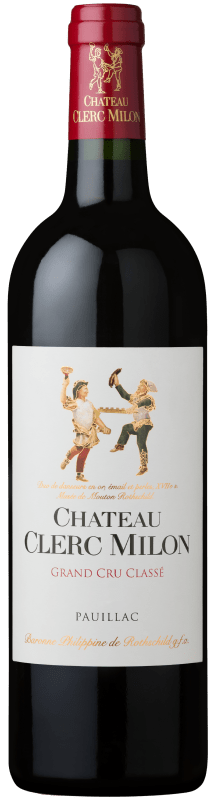


Winemaker Notes
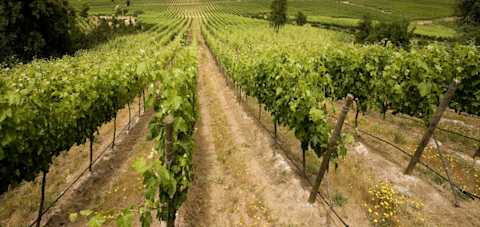
The terroir is that of Pauillac, where some of the world's finest wines are made. Its 41-hectare vineyard is located on the hillside of Mousset, overlooking the Gironde River, and thus benefits from an ideal microclimate. Its soil is made up of deep sandy gravel on a clay-limestone subsoil.
Blend: 62% Cabernet Sauvignon, 28% Merlot, 8% Cabernet Franc, 1% Carménère, 1% Petit Verdot
Professional Ratings
-
Decanter
Raspberries and red cherries on the nose with some rose petal aromas. Juicy and alive, great energy and brightness straight away, so generous, plump, a little darker on the palate with some dark chocolate, liquorice, blackcurrant and hints of cedar and bitterness. But equally the acidity is pronounced giving this real lift. Energetic with a mineral edged acidity. Dynamic and vibrant, great tannic frame, lively and so compelling. 1% Carmenere and 1% Petit Verdot completes the blend.
Barrel Sample: 95 -
James Suckling
A juicy and structured Clerc that is very typical with a firmness and brightness. It's medium-bodied with a solid center palate and a linear and racy finish. Just a hint of flint in the end. Vivid and pretty. A blend of 62% cabernet sauvignon, 28% merlot, 8% cabernet franc, 1% carmenere and 1% petit verdot.
Barrel Sample: 94-95 -
Robert Parker's Wine Advocate
The 2025 Clerc Milon has turned out beautifully, offering up notes of dark berries, petals and orange zest, framed by a deft touch of new oak. Medium- to full-bodied, dense and concentrated, with lively acids and a chalky finish, it's a blend of 62% Cabernet Sauvignon, 28% Merlot, 8% Cabernet Franc and the rest Carmenère and Petit Verdot.
Barrel Sample: 93-95 -
Jeb Dunnuck
A balanced, graceful Pauillac, the 2025 Château Clerc Milon is based on 62% Cabernet Sauvignon, 28% Merlot, 8% Cabernet Franc, and the rest Carménère and Petit Verdot, still resting in barrel. Cassis and black cherries, graphite, and a crushed stone-like minerality all define the nose. On the palate, it's medium to full-bodied with a pretty, pure, almost understated profile that builds nicely with time in the glass. It's a beautiful Pauillac in the making, and I'd certainly be happy with bottles in the cellar.
Barrel Sample: 92-94 -
Vinous
The 2025 Clerc Milon is powerful and explosive in the glass. A rush of dark red/purplish fruit, lavender, rose petal, mocha, new leather and a kiss of new oak makes a strong first impression. Supple and quite potent, with tons of energy, the Clerc Milon is impeccable in 2025. –Antonio Galloni
Barrel Sample: 92-94

One of the world’s most classic and popular styles of red wine, Bordeaux-inspired blends have spread from their homeland in France to nearly every corner of the New World. Typically based on either Cabernet Sauvignon or Merlot and supported by Cabernet Franc, Malbec and Petit Verdot, the best of these are densely hued, fragrant, full of fruit and boast a structure that begs for cellar time. Somm Secret—Blends from Bordeaux are generally earthier compared to those from the New World, which tend to be fruit-dominant.

The leader on the Left Bank in number of first growth classified producers within its boundaries, Pauillac has more than any of the other appellations, at three of the five. Chateau Lafite Rothschild and Mouton Rothschild border St. Estephe on its northern end and Chateau Latour is at Pauillac’s southern end, bordering St. Julien.
While the first growths are certainly some of the better producers of the Left Bank, today they often compete with some of the “lower ranked” producers (second, third, fourth, fifth growth) in quality and value. The Left Bank of Bordeaux subscribes to an arguably outdated method of classification that goes back to 1855. The finest chateaux in that year were judged on the basis of reputation and trading price; changes in rank since then have been miniscule at best. Today producers such as Chateau Pontet-Canet, Chateau Grand Puy-Lacoste, Chateau Lynch-Bages, among others (all fifth growth) offer some of the most outstanding wines in all of Bordeaux.
Defining characteristics of fine wines from Pauillac (i.e. Cabernet-based Bordeaux Blends) include inky and juicy blackcurrant, cedar or cigar box and plush or chalky tannins.
Layers of gravel in the Pauillac region are key to its wines’ character and quality. The layers offer excellent drainage in the relatively flat topography of the region allowing water to run off into “jalles” or streams, which subsequently flow off into the Gironde.