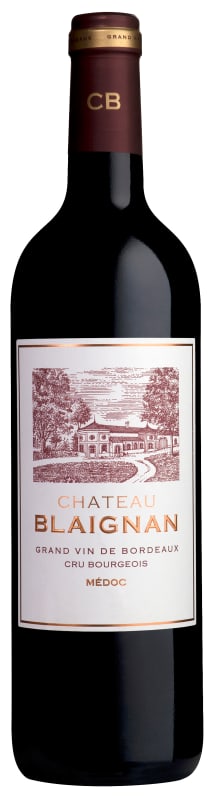


Winemaker Notes
The wine is of an intense color. The nose is fruity with pronounced notes of black currant, black cherries and a hint of spice. Full bodied, ChËteau Blaignan shows structure and velvet tannins on the palate, that make it a wine to drink young or to keep a few years in cellar.
Pair with your favorite steak or hearty meal.
Blend: 55% Cabernet Sauvignon, 41% Merlot, 9% Cabernet Franc
Professional Ratings
-
James Suckling
Sweet plums, flowers and fresh herbs on the nose, following through to a medium body with firm, chewy tannins and a savory finish.
-
Wine Enthusiast
A tradition of grape growing at this estate goes back to the 14th century. This 2019 vintage is now gently textured and full of ripe, smoky fruits. With a balanced character, fruit and acidity bring freshness at the end.
-
Wilfred Wong of Wine.com
The 2019 Chateau Blaignan is smooth and ready to enjoy. This wine shows aromas and flavors of rustic earth, dried herbs, and hints of tar. It should be excellent with a savory lamb stew. (Tasted: February 16, 2025, San Francisco, CA)
-
Wine Spectator
Presents dark cherry and plum compote flavors that lead the way, with tobacco and savory hints filling in. The focused, fine-grained finish has a pretty iron hint. Cabernet Sauvignon and Merlot. Drink now through 2029. 40,000 cases made, 5,000 cases imported.
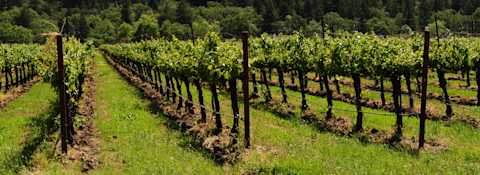


Château Blaignan is the one of the oldest winemaking estate in the Médoc region of Bordeaux. Documents dating back to the 15th century reveal that vineyards were planted in the hamlet of Blaignan for nearly 600 years. It is recognisable by its distinct tower which is in the heart of the vineyard. It is currently owned by the CA Grands Crus. They also owns Château Grand Puy Ducasse, Pauillac 5ème Grand Cru Classé, Château Meyney, St.-Estèphe, and Château de Santenay in Burgundy. The groups is deeply committed to the renaissance of the Château Blaignan. They invested over 3 million euros in the vineyards and brand new 100% temperature controlled cellars with small stainless steel vats for vinification by parcels.
The vineyard is 87 hectares in size (215 acres) is composed of limestone soils from a single vineyard. The average age of the vines is 25 years old. The vineyard goes through green harvest, leaf thinning and grass growing between rows to lower the yields. It is also certified ecologically sensitive with no usage of pesticides or herbicides. During the harvest, the grapes are picked up by plots and are vinified in 45 different size vats. After the fermentation, the wine is aged in stainless steel tanks and oak barrels for 12 months.
Château Blaignan is wine by Anne Le Naour (Managing Director and Head of Winemaking) and Hubert de Boüard (Consultant Winemaker and owner of Château Angelus, 1er Grand Cru Classé “A” Saint-Emilion). With this star winemaking team, they’re able to craft an outstanding wine that over delivers in quality every year. In a way, it benefits from “Grand Cru Classé” input while remaining affordable and accessible for the consumer.

One of the world’s most classic and popular styles of red wine, Bordeaux-inspired blends have spread from their homeland in France to nearly every corner of the New World. Typically based on either Cabernet Sauvignon or Merlot and supported by Cabernet Franc, Malbec and Petit Verdot, the best of these are densely hued, fragrant, full of fruit and boast a structure that begs for cellar time. Somm Secret—Blends from Bordeaux are generally earthier compared to those from the New World, which tend to be fruit-dominant.

One of the most—if not the most—famous red wine regions of the world, the Medoc reaches from the city of Bordeaux northwest along the left bank of the Gironde River almost all the way to the Atlantic. Its vineyards climb along a band of flatlands, sandwiched between the coastal river marshes and the pine forests in the west. The entire region can only claim to be three to eight miles wide (at its widest), but it is about 50 miles long.
While the Medoc encompasses the Haut Medoc, and thus most of the classed-growth villages (Margaux, Moulis, Listrac, St-Julien, Pauillac and St. Estephe) it is really only those wines produced in the Bas-Medoc that use the Medoc appellation name. The ones farther down the river, and on marginally higher ground, are eligible to claim the Haut Medoc appellation, or their village or cru status.
While the region can’t boast a particularly dramatic landscape, impressive chateaux disperse themselves among the magically well-drained gravel soils that define the area. This optimal soil draining capacity is completely necessary and ideal in the Medoc's damp, maritime climate. These gravels also serve well to store heat in cooler years.