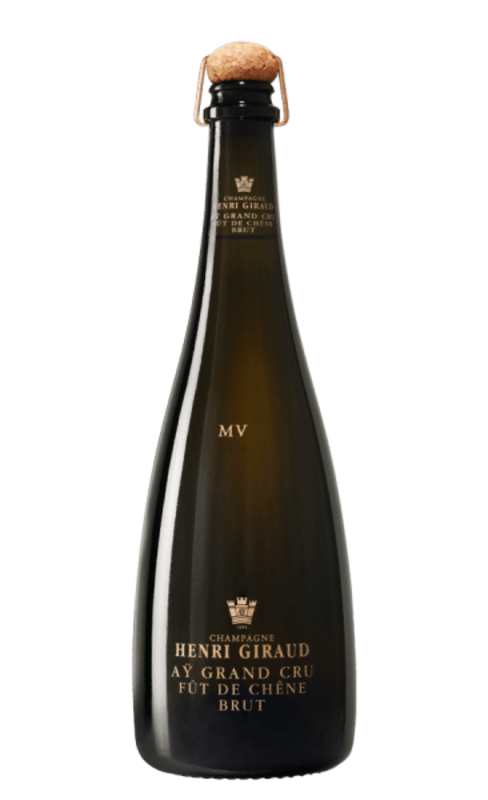


Winemaker Notes
Here is a unique lace built in the image of great perfumes, the perpetual reserve, gentle animal attraction. Salinity and warmth underline the meticulousness, harmony, and dexterity of MV. The blond Giraud blond typical of the MV family for a fine and present mousse. On the nose, one discovers a rich wine, on greedy notes of pastry, ripe yellow fruits and spices (cinnamon). The mouth offers an elegant, round attack, then unrolls its silky touch, carried by a certain salinity and a touch of minerality. The aftertaste asserts itself with a beautiful freshness, a light menthol presence.
Professional Ratings
-
James Suckling
An edgy, lively Champagne with bread dough, dried apples and apricots. Toffee with caramel with a lifted sense. Light oxidation with some nuts and saltiness. Full-bodied and very layered with so much going on. Creme brulee, pie crust and zingy acidity. Minty and lively. Strawberries and oranges coming through. This is 80% pinot noir and 20% chardonnay, all fermented in wood, 60% new. Drink now.
-
Robert Parker's Wine Advocate
Disgorged in March 2020, Giraud's newly released NV Brut Grand Cru Aÿ Fût de Chêne MV15 is terrific, bursting from the glass with aromas of pear, orange oil and peach mingled with nuances of warm pastry, toasted almonds, beeswax and clear honey that's already very nicely integrated. Full-bodied, textural and concentrated, this is a deep and muscular Champagne, with striking structure and vinosity, underpinned by lively acids and complemented by a pinpoint mousse.
-
Decanter
Simon Field MW: Modern oaky nose; hints of coconut and spruce; graphite and flintstone; behind that verbena, petits fruits rouges and a pleasing integration, tightly wound yet generous at the same time; a pleasing forum of inherent contradiction. Tim Hall: Tempting perfumes and spice of oak treatment on the nose; there's meat and savour, puckering salivation and real drive. A champagne of real individuality and distinction. Anne Krebiehl MW: The richness of roasted hazelnut, coconut, spruce and vanilla clothe the entire nose in smooth richness. The palate has that same, rounded, oaky sheen, with pleasantly integrated notes of graphite and flint and behind that verbena and petits fruits rouges. Mellow and rich but underneath the freshness and power are undeniable. A champagne, with great drive, of real individuality and distinction with great drive.
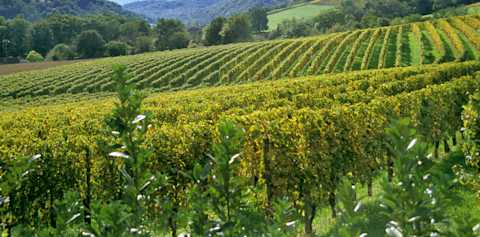

A term typically reserved for Champagne and Sparkling Wines, non-vintage or simply “NV” on a label indicates a blend of finished wines from different vintages (years of harvest). To make non-vintage Champagne, typically the current year’s harvest (in other words, the current vintage) forms the base of the blend. Finished wines from previous years, called “vins de reserve” are blended in at approximately 10-50% of the total volume in order to achieve the flavor, complexity, body and acidity for the desired house style. A tiny proportion of Champagnes are made from a single vintage.
There are also some very large production still wines that may not claim one particular vintage. This would be at the discretion of the winemaker’s goals for character of the final wine.

Associated with luxury, celebration, and romance, the region, Champagne, is home to the world’s most prized sparkling wine. In order to bear the label, ‘Champagne’, a sparkling wine must originate from this northeastern region of France—called Champagne—and adhere to strict quality standards. Made up of the three towns Reims, Épernay, and Aÿ, it was here that the traditional method of sparkling wine production was both invented and perfected, birthing a winemaking technique as well as a flavor profile that is now emulated worldwide.
Well-drained, limestone and chalky soil defines much of the region, which lend a mineral component to its wines. Champagne’s cold, continental climate promotes ample acidity in its grapes but weather differences from year to year can create significant variation between vintages. While vintage Champagnes are produced in exceptional years, non-vintage cuvées are produced annually from a blend of several years in order to produce Champagnes that maintain a consistent house style.
With nearly negligible exceptions, . These can be blended together or bottled as individual varietal Champagnes, depending on the final style of wine desired. Chardonnay, the only white variety, contributes freshness, elegance, lively acidity and notes of citrus, orchard fruit and white flowers. Pinot Noir and its relative Pinot Meunier, provide the backbone to many blends, adding structure, body and supple red fruit flavors. Wines with a large proportion of Pinot Meunier will be ready to drink earlier, while Pinot Noir contributes to longevity. Whether it is white or rosé, most Champagne is made from a blend of red and white grapes—and uniquely, rosé is often produce by blending together red and white wine. A Champagne made exclusively from Chardonnay will be labeled as ‘blanc de blancs,’ while ones comprised of only red grapes are called ‘blanc de noirs.’