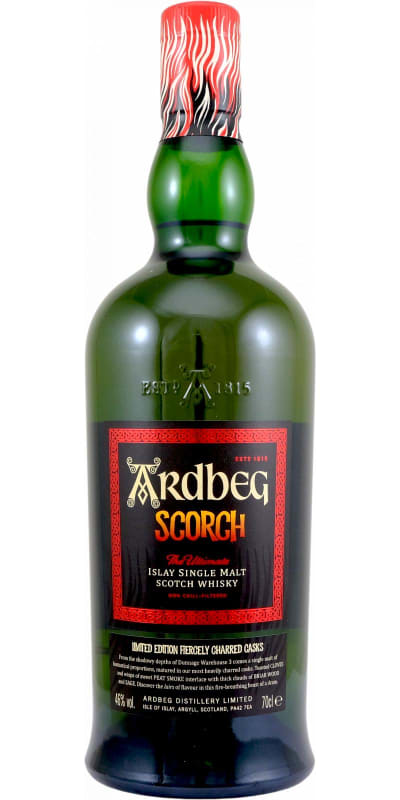


Distiller Notes
Bright brushed gold. On the nose, frighteningly intense aromas of soot and smoke lie in wait. Hints of aniseed and fragrant patchouli interlace with bold notes of quenched steel and saddle soap. With a drop of water, herbal top notes of briarwood, sage and pine wisp their way to the fore. Take a sip and experience lair upon lair of flavour. An oily mouthfeel grips the senses. Billowy clouds of sweet smoke and dragon charred oak permeate the palate, while grilled fare and black liquorice weave between notes of medicinal lozenge. A long and heroic finale, with a subtle tarry aftertaste. A finish that will drag on, well into its happily ever after.
Professional Ratings
-
Whisky Advocate
Ardbeg’s Feis Ile 2021 release was made available to the general public in June. Matured in heavily charred bourbon barrels to create a “scorching” effect. Fragrant peat and malt, dried seashells, brine, sea salt, and dockside wood on the nose. Richly layered on the palate—charcoal, iodine, and surprisingly balanced peat influence, considering this whisky’s name. Baked apple and a hint of bitter chocolate, cooked bananas, and dark berries on a long finish.



For over 200 years, Ardbeg has been made on the small, remote Scottish Isle of Islay. Some people travel to Ardbeg along the winding road from Port Ellen. Others follow their nose, their destiny or the advice of a good friend.
The Ardbeg Distillery lies on the rugged southern coast of Islay. Extreme conditions from the Atlantic shape Ardbeg’s unique water supply characteristics. Ardbeg’s soft, pure water comes from Loch Uigeadail, up the hill from the distillery. The Loch is the namesake for Ardbeg Uigeadail. By sitting close to the sea, the whisky also receives a certain salty, iodine character while it matures.
“A good gulp of hot Scotch Whisky at bedtime–it’s not very scientific, but it helps!”
Alexander Fleming, Scottish inventor of penicillin, prescribed it as a cure for the common cold. Today Single Malt Scotch Whiskies are prized by enthusiasts and aficionados the world over for their rarity, age and complexity. By definition these must be produced in Scotland from a single distillery and made entirely from malted barley, using a pot still. The appearance, aroma and flavor of a Single Malt Scotch Whisky can vary widely depending on whether it was produced in the Highlands, Lowlands Islands, Speyside, Islay or Campbelltown regions.