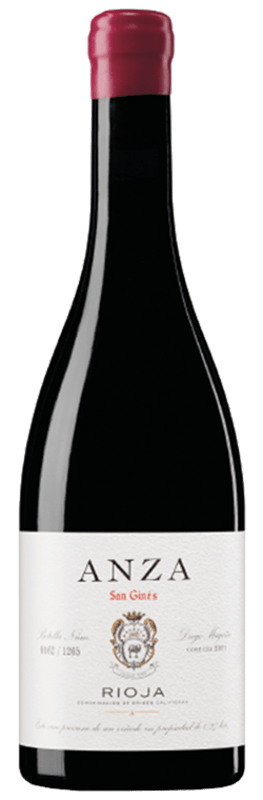


Winemaker Notes
Roughly 85% Tempranillo (four different clones), with the remainder planted to Graciano, Mazuelo, Garnacha, Viura, Malvasía Riojana, Calagraño, and Juan Garcia. Sourced from San Ginés, Diego's very first parcel in Laguardia. This 0.97-hectare vineyard was planted partly around 1900 and partly around 1940 with spectacular varietal diversity.
Professional Ratings
-
Robert Parker's Wine Advocate
The very young red 2023 Anza San Ginés was produced with a complex field blend—two types of Tempranillo, Tinta Velasco, Juan Garcia, Maturana, Castellana Blanca (Cagazal), Viura, Graciano Antiguo (only one seed), Malvasía, Viura, Garnacha, etc.—from a plot in the Barranco de San Ginés in the village of Laguardia. It matured in two 500-liter oak barrels. It's perfumed, nuanced, clean and precise, with contained ripeness, elegant and balanced. It has a medium-bodied palate with very fine, elegant tannins. It has a moderate 13.6% alcohol and very good freshness and especially balance. It's a step up over the 2022. It matured in used 500-liter oak barrels that have always been used for this wine.
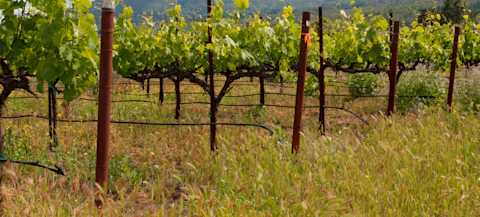

Hailed as the star red variety in Spain’s most celebrated wine region, Tempranillo from Rioja, or simply labeled, “Rioja,” produces elegant wines with complex notes of red and black fruit, crushed rock, leather, toast and tobacco, whose best examples are fully capable of decades of improvement in the cellar.
Rioja wines are typically a blend of fruit from its three sub-regions: Rioja Alta, Rioja Alavesa and Rioja Oriental, although specific sub-region (zonas), village (municipios) and vineyard (viñedo singular) wines can now be labeled. Rioja Alta and Alavesa, at the highest elevations, are considered to be the source of the brightest, most elegant fruit, while grapes from the warmer and drier, Rioja Oriental, produce wines with deep color, great body and richness.