


Winemaker Notes
Pair this wine with beef bourguignon and stroganoff, lamb shank, and roasted rabbit.
Professional Ratings
-
Decanter
The original Montosoli bottling, first made in 1975, this is a gorgeous interpretation of the 2021 vintage and a testament to this revered site. Discreetly seductive, it slowly unleashes violet, vanilla, tarragon, sweet spice and damp forest floor. The palate is amply loaded with red and black currants without being heavy. Sangiovese's brilliant acidity is on full display. Finessed tannins are well stacked, seamlessly placed and confidently firm. Floral and herb accents rebound on the finish. Taut but not austere, this promises to deliver slowly.
-
Robert Parker's Wine Advocate
Proprietor Elisabetta Gnudi Angelini has important holdings in this special cru, and if you're after Montosoli, this is one of the best expressions around. Fruit comes from a five-hectare plot with friable galestro soils at a sweet spot perched at 350 meters above sea level. The Altesino 2021 Brunello di Montalcino Vigna Montosoli flaunts an especially sharp profile with enhanced minerality and focus. There is wild cherry and dried currant, but ultimately more impactful are the elegant aromas of crushed stone. These give the wine brightness and vertical lift. The mouthfeel is medium- to full-bodied in texture with fine, powdery tannins that are well integrated. It is matured in Slavonian oak casks. You can cellar this wine longer, but you can also enjoy it in the medium term to take advantage of that pretty fruit freshness.
-
Wine Spectator
Balsamic flavors of eucalyptus, tomato leaf and mint mingle with cherry, strawberry and rose in this taut, detailed red. On the elegant side, with midpalate presence and vivid acidity. A layer of chalky tannins lines the finish.


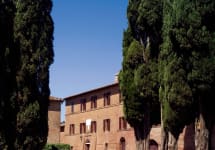
Near the end of 2002, Elisabetta Gnudi Angelini, owner of nearby Tenuta Caparzo, purchased the Altesino winery. Today's winemaking team, led by Simone Giunti and Alessandro Ciacci, is firmly committed to maintaining Altesino’s hard-earned reputation as a Montalcino institution and a global leader in innovative winemaking. Amid the eastern hills of Montalcino near Siena in central Tuscany, stands the magnificently elegant 14th century-built Palazzo Altesi, home to the Altesino winery and a marvelous resort. The ancient coat of arms, carved in white Carrara marble, is still visible above the antique oak portal. The stunning Palazzo Altesi beautifully reflects Altesino’s charm and refinement. Though the worldwide reputation of Brunello has encouraged some conservatism among Montalcino estates, Altesino has always been a leader, unafraid of innovation. The estate pioneered the technique of aging its IGT wines in small French oak barrels, limiting the time spent in oak to enhance each wine’s personality. The resulting wines were a groundbreaking improvement over those produced by traditional methods. No longer overwhelmed by wood, they were able to display the unique characteristics of the fruit, with softened tannins and perfect balance. Not content to rest on its laurels, Altesino became the first Montalcino estate to introduce the concept of cru wines, made with a special selection of grapes from a single vineyard. Its Montosoli Brunello, named after the prestigious vineyard, was the first of these wines and is still considered among the regions finest. Altesino also pioneered the concept of Brunello futures (wine purchased before its release) with its 1985 vintage. This commitment to innovation led to many modern wines in the estates portfolio, including Alte d’Altesi, Palazzo Altesi and Rosso di Altesino. Elegance, finesse, and a fruitier, richer style are the trademarks of Altesino’s wines and have earned the estate a position among the very top producers of Brunello. This achievement is even more impressive considering Brunello is perhaps the most recognized Italian appellation.

Among Italy's elite red grape varieties, Sangiovese has the perfect intersection of bright red fruit and savory earthiness and is responsible for the best red wines of Tuscany. While it is best known as the chief component of Chianti, it is also the main grape in Vino Nobile di Montepulciano and reaches the height of its power and intensity in the complex, long-lived Brunello di Montalcino. Somm Secret—Sangiovese doubles under the alias, Nielluccio, on the French island of Corsica where it produces distinctly floral and refreshing reds and rosés.

Famous for its bold, layered and long-lived red, Brunello di Montalcino, the town of Montalcino is about 70 miles south of Florence, and has a warmer and drier climate than that of its neighbor, Chianti. The Sangiovese grape is king here, as it is in Chianti, but Montalcino has its own clone called Brunello.
The Brunello vineyards of Montalcino blanket the rolling hills surrounding the village and fan out at various elevations, creating the potential for Brunello wines expressing different styles. From the valleys, where deeper deposits of clay are found, come wines typically bolder, more concentrated and rich in opulent black fruit. The hillside vineyards produce wines more concentrated in red fruits and floral aromas; these sites reach up to over 1,600 feet and have shallow soils of rocks and shale.
Brunello di Montalcino by law must be aged a minimum of four years, including two years in barrel before realease and once released, typically needs more time in bottle for its drinking potential to be fully reached. The good news is that Montalcino makes a “baby brother” version. The wines called Rosso di Montalcino are often made from younger vines, aged for about a year before release, offer extraordinary values and are ready to drink young.