

Winemaker Notes
Professional Ratings
-
Jeb Dunnuck
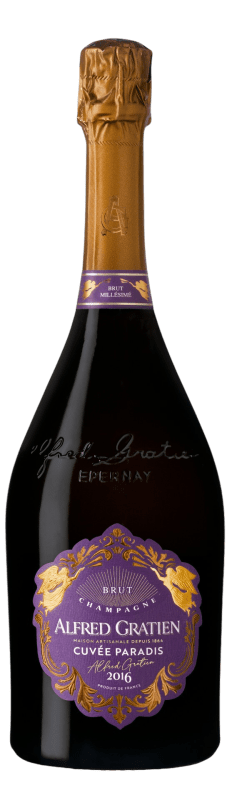
The 2016 Champagne Cuvée Paradis Brut pours a bright silver/yellow hue and offers a pretty, floral bouquet on the nose with aromas of fresh baked brioche, candied grapefruit, yellow plum, and vanilla bean. A blend of 65% Pinot Noir with the rest Chardonnay, coming from Premier and Grand Cru villages and raised in 228-liter barrels prior to bottling, the palate offers finesse and balance, with a good deal of persistence and energetic drive through a long finish. The mousse pillows through the mid-palate to round things out, and its silky texture of citrus oil coats the palate. An impressive offering, it has the backbone to last over the coming 15 years. Disgorged June 2024.
-
Wine Enthusiast
This is the top cuvée from this Champagne producer. Fermented in wood and disgorged in 2024, the wine is rich, a blend of Chardonnay and Pinot Noir. It has some age, giving a toasty aroma, while retaining white fruit on the palate.
Cellar Selection -
James Suckling
This flavorful Champagne shows aromas of baked apples, hazelnuts, vanilla and pastries. It’s generous and subtly nutty, retaining bright acidity throughout. Sleek bubbles. 65% chardonnay and 35% pinot noir. Disgorged January 2024. Drink now or hold.



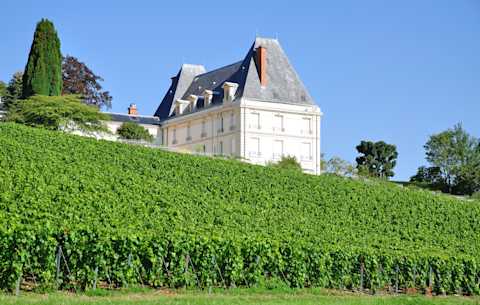
If exceptional had a name, it would be Champagne Alfred Gratien . Alfred Gratien champagnes are handcrafted for guaranteed quality and consistency. A few miles away from Epernay’s bustling town center, deep in the heart of a Champagne vineyard, are the Alfred Gratien champagne cellars. It was here, on Rue Maurice Cerveaux, that Alfred Gratien set up his business and created his first cuvées in 1864. For over a century and a half, Alfred Gratien champagnes have remained a family affair perpetuated by the expertise and know-how of their founder.
The house’s legacy relies on its cellar masters who were taught a trade that has been handed down from father to son for four generations now. Gaston Jaeger, the earliest first descendant, took on the role in 1905. In 1951, he passed the craft on to his son Charles, who in turn paved the way for his son Jean-Pierre to take over in 1966.
Nicolas joined his father in 1990, with the pair now having worked side-by-side for 17 years. This wonderful collaborative effort is a continuation of the inherited know-how that has been passed on for nearly a century. In 2007, Nicolas became the cellar master for Alfred Gratien Champagne in Epernay. He embodies the living memory of the Alfred Gratien house and its grand cru champagnes.
Representing the topmost expression of a Champagne house, a vintage Champagne is one made from the produce of a single, superior harvest year. Vintage Champagnes account for a mere 5% of total Champagne production and are produced about three times in a decade. Champagne is typically made as a blend of multiple years in order to preserve the house style; these will have non-vintage, or simply, NV on the label. The term, "vintage," as it applies to all wine, simply means a single harvest year.

Associated with luxury, celebration, and romance, the region, Champagne, is home to the world’s most prized sparkling wine. In order to bear the label, ‘Champagne’, a sparkling wine must originate from this northeastern region of France—called Champagne—and adhere to strict quality standards. Made up of the three towns Reims, Épernay, and Aÿ, it was here that the traditional method of sparkling wine production was both invented and perfected, birthing a winemaking technique as well as a flavor profile that is now emulated worldwide.
Well-drained, limestone and chalky soil defines much of the region, which lend a mineral component to its wines. Champagne’s cold, continental climate promotes ample acidity in its grapes but weather differences from year to year can create significant variation between vintages. While vintage Champagnes are produced in exceptional years, non-vintage cuvées are produced annually from a blend of several years in order to produce Champagnes that maintain a consistent house style.
With nearly negligible exceptions, . These can be blended together or bottled as individual varietal Champagnes, depending on the final style of wine desired. Chardonnay, the only white variety, contributes freshness, elegance, lively acidity and notes of citrus, orchard fruit and white flowers. Pinot Noir and its relative Pinot Meunier, provide the backbone to many blends, adding structure, body and supple red fruit flavors. Wines with a large proportion of Pinot Meunier will be ready to drink earlier, while Pinot Noir contributes to longevity. Whether it is white or rosé, most Champagne is made from a blend of red and white grapes—and uniquely, rosé is often produce by blending together red and white wine. A Champagne made exclusively from Chardonnay will be labeled as ‘blanc de blancs,’ while ones comprised of only red grapes are called ‘blanc de noirs.’