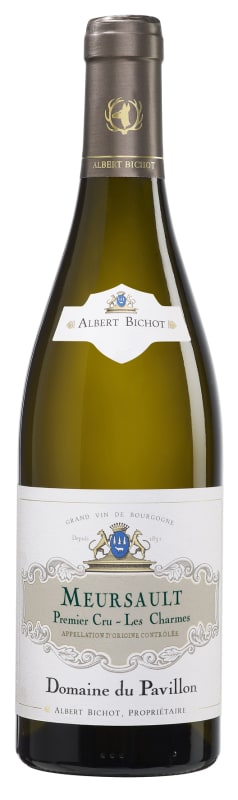


Winemaker Notes
Generous and flattering, this wine features notes of candied lemon, almonds, white flowers and freshly baked bread. The palate is smooth and velvety without any heaviness, with hints of warm brioche and spice. Long and tasty, the finish mirrors the bouquet's aromas.
Ideal with fine fish, shellfish, white meats, poultry in sauce and full-flavored cheeses.
Professional Ratings
-
James Suckling
All you want in wine from this famous Meaursault Premier Cru site! Rich and creamy with tons of stone fruit and every bit as much chalky minerality, and together they really dance across your palate. Wonderful, citrusy freshness at the very long, ripe yet elegant finish. Very polished. From organically grown grapes. Drink or hold.
-
Wine Spectator
Shows ample concentration and structure, framing the peach, citronella, butterscotch and clove flavors. The texture verges on oily, just pulling back as this turns more precise on the citrusy aftertaste.
-
Jasper Morris
A full yellow in colour, with a weight of rich fruit on the nose. Charmes can cope with this, even the faint pineapple admixture. Certainly, the weight of fruit is admirable and it is not too ponderous, with a lively enough finish to keep everything in place. Thick in texture, and the pineapple develops further which perhaps slightly impinges on the elegance of this wine.



Since 1350, the Bichot family has called Burgundy home. But, it was in 1831 that Bernard Bichot founded a merchant house bearing his name in Monthélie, a couple of kilometers south of Beaune. At the end of the 19th century, his grandson Albert Bichot took the family business into a new direction and created the winery, Maison Albert Bichot as we know it. The family heritage has been perpetuated from father to son since then. The family crest, consisting of a deer and antlers, has been synonymous with the winery since its inception.
Since 1996, Albéric Bichot has represented the 6th generation managing the winery. The winery’s mission is to utilize the best fruit possible to create the best wine and best expression of terroir. In the constant pursuit of accomplishing this mission, Albert Bichot has acquired 250 acres of vineyards in the most reputed growing areas throughout Burgundy. In addition to this expertise as a wine-grower, Albert Bichot carefully sources grapes with an extremely hands-on approach, in order to vinify many of its regional and village wines, enabling them to supply high quality wines with continuity. For these grapes sourced from our partner growers, quality, and a close partnership, are of the utmost importance.
Albert Bichot owns 6 Domaines set at the heart of 5 great vinicultural regions that make up Burgundy: Chablis, Cote de Nuits, Cote de Beaune, Cote Chalonnaise, and Beaujolais. Each estate consists of vineyards cultivated with sustainable practices, as well as facilities, cellars and dedicated winemaking teams devoted to wines of that Domaine and region.
The 6 estates include:
- Domaine Long-Depaquit in Chablis
- Chateau Gris in the Cote de Nuits (Nuits-St.-Georges)
- Domaine du Clos-Frantin in the Cote de Nuits (Nuits-St.-Georges)
- Domaine du Pavillon in the Cote de Beaune (Pommard)
- Domaine Adelie in the Cote Chalonnaise (Mercurey)
- Domaine du Rochegres in Beaujolais (Moulin-à-Vent)

One of the most popular and versatile white wine grapes, Chardonnay offers a wide range of flavors and styles depending on where it is grown and how it is made. While it tends to flourish in most environments, Chardonnay from its Burgundian homeland produces some of the most remarkable and longest lived examples. California produces both oaky, buttery styles and leaner, European-inspired wines. Somm Secret—The Burgundian subregion of Chablis, while typically using older oak barrels, produces a bright style similar to the unoaked style. Anyone who doesn't like oaky Chardonnay would likely enjoy Chablis.

Known to offer a magical balance of smoothness and freshness, Meursault's quality is hard to rival. The village lies in the middle of Côte de Beaune, just south of Volnay. Meursault is said to mean “mouse’s jump” because in the past the plots producing Pinot Noir and those producing Chardonnay were no more than a mouse’s jump from one another. Today the village is almost exclusively Chardonnay. A tiny bit of Pinot Noir is produced here with the best coming from Les Santenots on its northern side near Volnay.
While there are no Grands Crus, Meursault’s numerous acclaimed Premiers Crus can compete with any other top-notch white Burgundy. Some to know are Les Perrières, Les Genevrières, Les Charmes, Le Poruzot, Les Bouchères and Les Gouttes d’Or.
Meursault produces outstanding village level wines as well. In general great Premiers Crus and even village level Meursault (Chardonnay) have enticing aromas of lime peel, tropical fruit, crushed rocks, spice and hazelnut. On the palate there is a wonderful balance of brightness and a seductive length with flavors of white peach, pineapple and citrus.