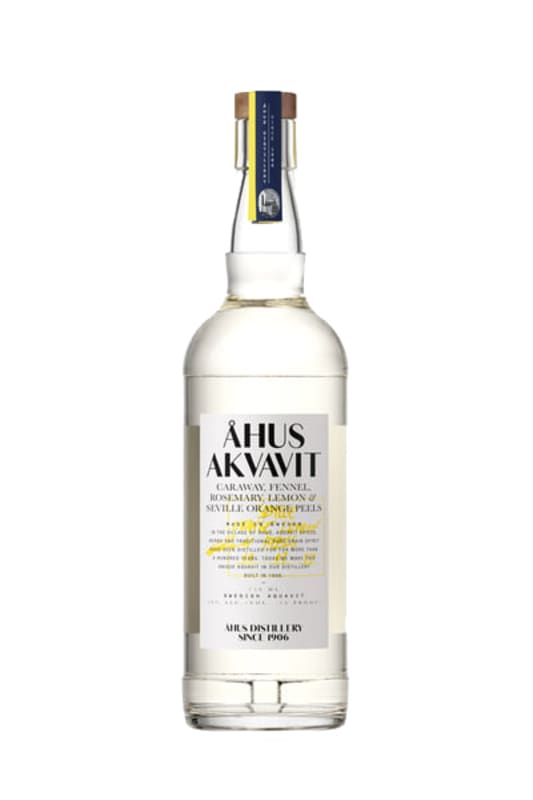

Distiller Notes
Earthy caraway and refreshing, herbaceous rosemary dominate the nose followed on the palate by bright citrus and sweet, subtle fennel. Silky mouthfeel with a medium long finish that’s spicy and invigorating.
Swedish food is truly wonderful, especially if you’re a seafood fan. Most traditionally, cold shots of aquavit are paired with pickled herrings, salmon, fresh potatoes and cheeses. Oysters and shellfish, traditional Jewish deli fare and sushi also work beautifully with aquavit.
Akvavit, aquavit, or aqua vitae (“water of life” in Latin), was created during the 15th century by monks as a medicine comprised of secret botanical blends, soaked and distilled into a clear spirit and believed to have mystical properties.
Today, there are strict set of legal standards in order for a spirit to be a true aquavit. The primary flavor has to be caraway and/or dill, produced using a rectified spirit and at least 37.5% alcohol by volume. In order to be considered a true Swedish aquavit, it must also contain fennel.


A German word originally referring to the amount of a single pour, Schnapps is equivalent to the English ‘shot’ or ‘dram.’ Later, the term came to be associated with any type of strong alcoholic drink and began picking up regional styles and production methods. For example, Schnapps made in northern Europe are typically based on grain spirits and flavored with herbs, while Schnapps made in southern and central Europe are clear Brandies distilled from fermented fruit. Traditional European Schnapps contain no sugar or flavoring agents, whereas Schnapps made in America and other New World countries are generally much less expensive and include both flavors and sweeteners.