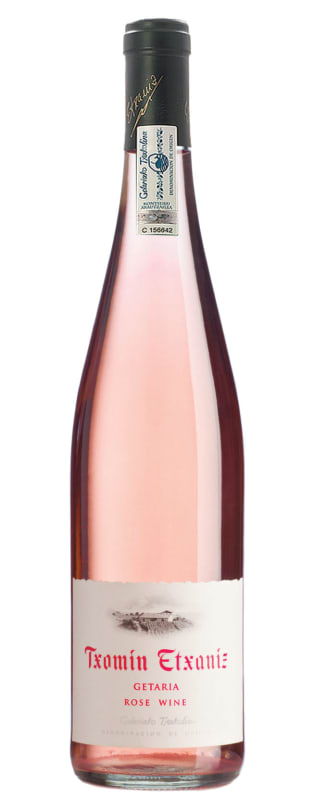


Winemaker Notes
Deep electric pink. Aromas of grapefruit, white flowers, sour cherry, and watermelon jump from the glass. On the palate, the wine is fresh and minerally, with rich balance and a bright frizzante character.
Professional Ratings
-
Jeb Dunnuck
A 50-50 blend of white and red grapes, Hondarrabi Zuri and Hondarrabi Beltza, harvested at the same time and left on the skin with the juice for 12 hours, the 2025 Rosado opens in bell pepper and dried herb, with moderate complexity and medium-bodied force. Tasting of the Atlantic Ocean, it’s pure and well-made, with 5.1 grams per liter for balance. Made to go with fresh octopus with paprika.


Whether it’s playful and fun or savory and serious, most rosé today is not your grandmother’s White Zinfandel, though that category remains strong. Pink wine has recently become quite trendy, and this time around it’s commonly quite dry. Since the pigment in red wines comes from keeping fermenting juice in contact with the grape skins for an extended period, it follows that a pink wine can be made using just a brief period of skin contact—usually just a couple of days. The resulting color depends on grape variety and winemaking style, ranging from pale salmon to deep magenta.

On the southern edge of the rocky Bay of Biscay in northern Spain, this is Basque country and home to the refreshing and slightly effervescent (usually) white wine, Txakoli. Three subregions compose the larger one: Getariako Txakolina, Bizkaiko Txakolina and Arabako Txakolina. While Hondarribi Zuri and Hondarrabi Beltza are the main grape varieties, other French varieties are scattered throughout the region.