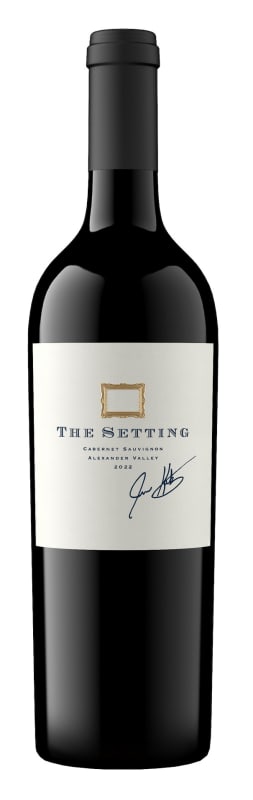


Winemaker Notes
The 2022 Alexander Valley Cabernet Sauvignon showcases a beautiful balance of boldness and finesse exuding a true sense of place of the two vineyard sites it is sourced from. Consisting of 100% Cabernet Sauvignon from Battle Family Vineyard and Stuhlmuller Vineyard in Alexander Valley, the different elevations, soil types and microclimates within each property make for a stunning and multifaceted Cabernet Sauvignon. With red volcanic soils in the heart of the appellation, this fruit is terroir-driven with powerful elegance and complexity. Winemaker Jesse Katz crafts this wine to be vibrant and fresh in style with aromas of ripe blackberries, cassis, and dark plum, intertwined with notes of cedar, dried herbs and hint of mocha. With well-structured tannins, it has a supple and velvety mouthfeel with a lingering finish making for a perfectly balanced Cabernet Sauvignon. Built to age gracefully but approachable in its youth, this wine will only continue to become more nuanced over the next decade but can be enjoyed now with decanting before enjoying.
Professional Ratings
-
Jeb Dunnuck
The 2022 Cabernet Sauvignon Alexander Valley comes from one of the coldest sites from which they farm Cabernet Sauvignon. A dark red color, the wine is forward with blue-fruited highlights and shining with notes of juniper, pine, violets, forest floor, and fresh herbs. It’s long, elegant, and focused on the palate, with a more linear feel, an even plushness of tannins, and redcurrants, cassis, and vanilla shining through to the long finish. Drink 2025-2050.
-
Wine Enthusiast
Generous aromas of crushed raspberry, plum compote, cocoa and crushed herbs explode on the nose of this Cabernet. The palate displays rich, supple tannin balanced by juicy acidity and flavors of cherry gastrique, raspberry liqueur, graphite and herb mélange that dance and dart across the long finish. Delicious now, this will benefit from some time in the cellar.
Editors' Choice -
Robert Parker's Wine Advocate
The 2022 Cabernet Sauvignon Alexander Valley, matured in 85% new French oak for 22 months, opens with red and black plum aromas that give way to nuances of lilac, garrigue, iodine and iron-like mineral tones. The medium-bodied palate is concentrated yet elegant, combining floral fruit with ultra-powdery tannins and juicy acidity, and it has a very long, nuanced finish.
-
James Suckling
A beautiful, supple and rich-tasting red that’s generous in black fruit, blueberries, cocoa and vanilla bean flavors. Full-bodied, appropriately tannic and smooth. The blackberries and black cherries linger nicely in the finish. Drink now or hold.


A noble variety bestowed with both power and concentration, Cabernet Sauvignon enjoys success all over the globe, its best examples showing potential to age beautifully for decades. Cabernet Sauvignon flourishes in Bordeaux's Medoc where it is often blended with Merlot and smaller amounts of some combination of Cabernet Franc, Malbecand Petit Verdot. In the Napa Valley, ‘Cab’ is responsible for some of the world’s most prestigious, age-worthy and sought-after “cult” wines. Somm Secret—DNA profiling in 1997 revealed that Cabernet Sauvignon was born from a spontaneous crossing of Cabernet Franc and Sauvignon Blanc in 17th century southwest France.

Nearly a northern extension of Napa Valley, Alexander Valley starts just north of the small, Knights Valley, and is just a few minutes drive from the Napa town of Calistoga. It is Sonoma County’s hottest AVA. But the Russian River, which runs through the valley, creates cooler pockets and its soft, alluvial soil is ideal for grape growing, especially Cabernet Sauvignon. In fact, some believe that Alexander Valley Cabernets truly rival the best from Napa Valley and many of the heavy-hitter producers have largely invested here.
In addition to Cabernet Sauvignon, which makes up over 50% of plantings, Merlot and old vine Zinfandel thrive here. Ample, fleshy Chardonnay and Sauvignon Blanc dominate white wine production. Some old-vine plantings of Grenache have also been discovered and more recent experiments with Sangiovese and Barbera show great promise.