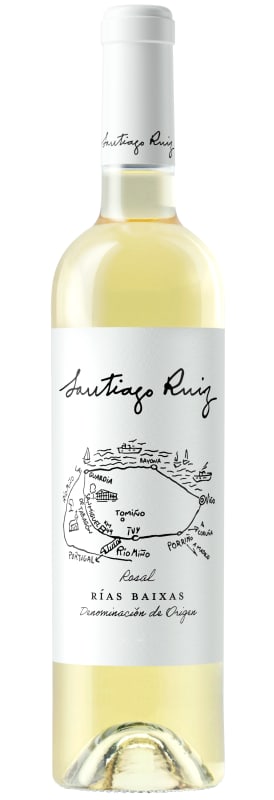


Winemaker Notes
Pale yellow straw with green reflections. Complex and well-integrated aromaticprofile. Citrus and fresh fruit notes characteristic of Albariño, floral aromas from Loureiro, stone and orchard fruit nuances from Godello and Treixadura, herbal notes and mineral characteristics contributed by Caiño Blanco. Dry, with high acidity providing freshness and tension. Medium body with good balanceand concentration. Flavors of citrus, floral and orchard fruit, complemented by subtle saline notes. Long, citrus-driven finish.
This wine pairs very well with food, not only with typical Galician dishes, fish or seafood, but also with Asian cuisine, white meats and paté.
Blend: 85% Albariño, 5% Godello, 5% Loureiro, 3% Treixadura, 2% Caíño Blanco
Professional Ratings
-
Wilfred Wong of Wine.com
2025 Santiago Ruiz RÍAS BAIXAS Medium yellow color; attractive dried spices rise from the glass, followed by a whisper of orchard fruit and sea air; medium bodied, firm and beautifully situated on the palate; dry, with medium acidity and lively stone fruit flavors sailing through the finish. I fell in love with the wines of Rías Baixas during my travels through Spain in my BevMo! days, and this bottle takes me right back—there is something wonderfully Atlantic about these wines. I’d put a platter of simply steamed Galician-style mussels and clams alongside it, add some crusty bread for the juices, and happily let the ocean and the wine do the talking. (Tasted: August 21, 2026, San Francisco, CA)


Bright and aromatic with distinctive floral and fruity characteristics, Albariño has enjoyed a surge in popularity and an increase in plantings over the last couple of decades. Thick skins allow it to withstand the humid conditions of its homeland, Rías Baixas, Spain, free of malady, and produce a weighty but fresh white. Somm Secret—Albariño claims dual citizenship in Spain and Portugal. Under the name Alvarinho, it thrives in Portugal’s northwestern Vinho Verde region, which predictably, borders part of Spain’s Rías Baixas.

Named after the rías, or estuarine inlets, that flow as far as 20 miles inland, Rías Baixas is an Atlantic coastal region with a cool and wet maritime climate. The entire region claims soil based on granite bedrock, but the inlets create five subregions of slightly different growing environments for its prized white grape, Albariño.
Val do Salnés on the west coast is said to be the birthplace of Albariño; it is the coolest and wettest of all of the regions. Having been named as the original subregion, today it has the most area under vine and largest number of wineries.
Ribeira do Ulla in the north and inland along the Ulla River is the newest to be included. It is actually the birthplace of the Padrón pepper!
Soutomaior is the smallest region and is tucked up in the hills at the end of the inlet called Ria de Vigo. Its soils are light and sandy over granite.
O Rosal and Condado do Tea are the farthest south in Rías Baixas and their vineyards actually cover the northern slopes of the Miño River, facing the Vinho Verde region in Portugal on its southern bank.
Albariño gives this region its fame and covers 90% of the area under vine. Caiño blanco, Treixadura and Loureira as well as occasionally Torrontés and Godello are permitted in small amounts in blends with Albariño. Red grapes are not very popular but Mencía, Espadeiro and Caiño Tinto are permitted and grown.