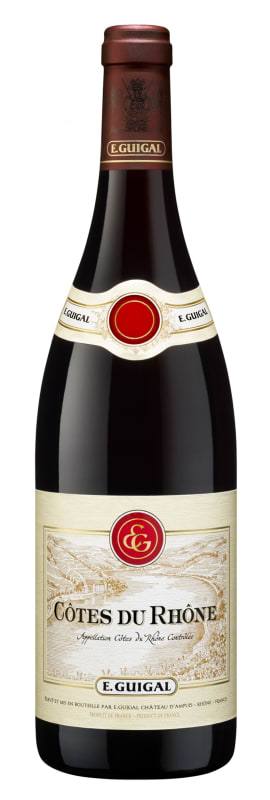


Winemaker Notes
Professional Ratings
-
Wine Enthusiast
The wine opens with cassis, muddled blackberry, dried field grass, tobacco leaf and black-cherry skin. Pillowy briary fruit acknowledges grippy tannins that emerge midpalate and carry towards a finish that reveals hints of black olive. This wine demands grilled meats, roasted chicken and your stinkiest blue cheese.
-
Jeb Dunnuck
Based on 50% Syrah, 40% Grenache, and 10% Mourvèdre, the 2023 Côtes du Rhône reveals beautiful blackberries, red berries, peppery herbs, and violets. Medium-bodied and supple on the palate, it has a round, charming texture and beautiful balance. Brought up partially in foudres, this pleasure-bent effort will shine over the coming 5-7 years.
Barrel Sample: 89-91 -
Robert Parker's Wine Advocate
The 2023 Côtes du Rhône opens with gourmand aromas of dark fruits, dark cherries and flowers. Medium-bodied, juicy and supple, it’s immediately appealing and easy to enjoy. It's a perfect introduction to the wines of the Rhône Valley.
-
Wine Spectator
A sturdy, substantial Cotes du Rhone, with plenty of ripe, round fruit supported by pronounced mineral intensity. A whiff of mesquite smoke and a kick of bitter cherry pit punctuate the close. Firmly structured, with plenty of stuffing and good intensity throughout. Syrah, Grenache and Mourvedre.



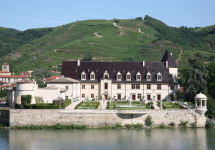
The Guigal domain was founded in 1946 by Etienne Guigal in the ancient village of Ampuis, home of the wines of the Côte-Rôtie. In these vineyards that are over 2400 years old, you can still see the small terraced walls characteristic of the Roman period. Etienne Guigal arrived in this region in 1923 at the age of 14. He made wine for over 67 vintages and, at the beginning of his career, participated in the development of the Vidal-Fleury establishment.
Despite his young age, Marcel Guigal took over from his father in 1961 when the latter was victim to a brutal illness rendering him blind. Marcel's hard work and perseverance enabled the Guigals to buy out Vidal-Fleury in 1984, although the establishment retains its own identity and commercial autonomy. In 2000, the Guigals purchased the Jean-Louis Grippat estate in Saint-Joseph and Hermitage, as well as the Domaine de Vallouit in Côte-Rôtie, Hermitage, Saint-Joseph and Crozes-Hermitage.
In the cellars of the Guigal estate in Ampuis, the northern appellations of the Rhône Valley are produced and aged. These are the appellations of Côte-Rôtie, Condrieu, Hermitage, Saint-Joseph and Crozes-Hermitage. The great appellations of the Southern Rhône, Chateauneuf-du-Pape, Gigondas, Tavel and Côtes-du-Rhône, are also aged in the Ampuis cellars.

With bold fruit flavors and accents of sweet spice, Grenache, Syrah and Mourvèdre form the base of the classic Rhône Red Blend, while Carignan, Cinsault and Counoise often come in to play. Though they originated from France’s southern Rhône Valley, with some creative interpretation, Rhône blends have also become popular in other countries. Somm Secret—Putting their own local spin on the Rhône Red Blend, those from Priorat often include Merlot and Cabernet Sauvignon. In California, it is not uncommon to see Petite Sirah make an appearance.

Typically thought of as a baby Chateâuneuf-du-Pape, the term Côtes du Rhône actually doesn’t merely apply to the flatter outskirts of the major southern Rhône appellations, it also includes the fringes of well-respected northern Rhône appellations. White wines can be produced under the appellation name, but very little is actually made.
The region offers some of the best values in France and even some first-rate and age-worthy reds. Red wine varieties include most of the Chateâuneuf-du-Pape varieties like Grenache, Syrah, Mourvedre, Cinsault, and Counoise, as well as Carignan. White grapes grown include Grenache blanc, Roussanne and Viognier, among others.