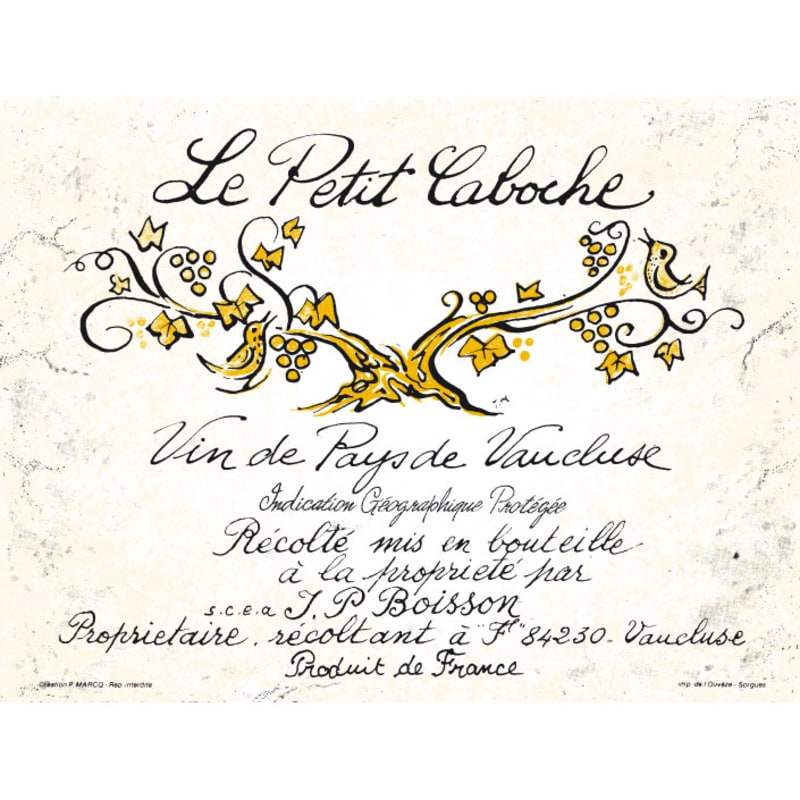

Winemaker Notes


Jean-Pierre Boisson, former long-serving mayor of Châteauneuf-du-Pape, runs Domaine Père Caboche with his children Emily & Nicolas. Members of the Boisson family have been both winemakers and blacksmiths for generations. The family nickname of Caboche derives from the old Provençal word for ‘horseshoe nails’ and their Vieilles Vignes cuvée is named after Elisabeth Chambellan, a local blacksmith’s daughter who married Jean-Louis Boisson in 1772.
"Since 1772, we have had parcels that have remained in the family, without there being any exchange or sale. The vines which are still there now are over 100 years old and produce an outstanding wine. The oldest parcel was planted in 1906. As a tribute and thanks to Elisabeth, we are today vine-growers from father to son and daughter." On the Châteauneuf du Pape appellation, the Domaine du Père Caboche vineyard is covered with rolled pebbles on 17 hectares, with the greatest density on the famous soil of La Crau. They contribute to the density and fullness of our wines. On this sea of pebbles, the vineyard still offers different products, thanks to the different layers in the underground. The clay-calcareous soil helps the vines with their water retaining properties, which has become more and more important with climatic changes. Thus the wines appear to be softer in the mouth. Sand is also present in proportions changing from one soil to another, bringing notes of elegance and finesse.
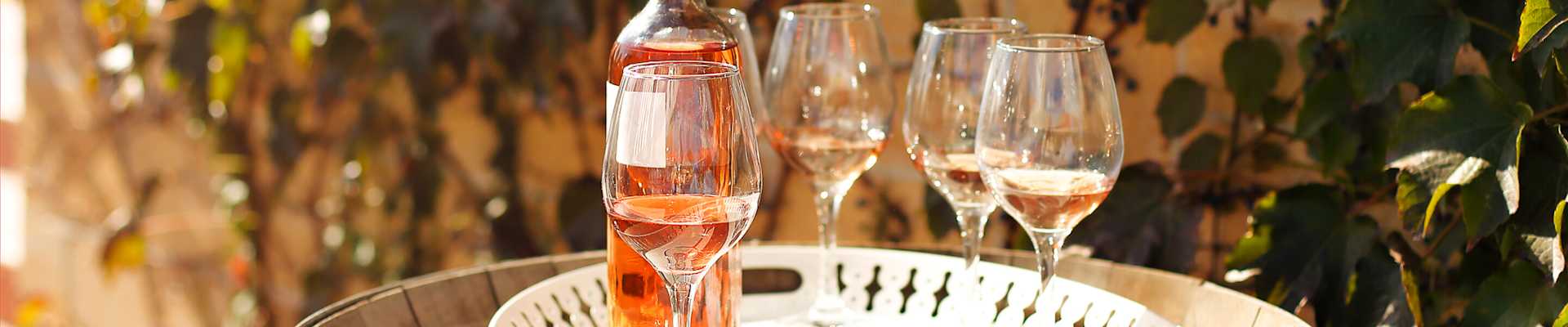
Whether it’s playful and fun or savory and serious, most rosé today is not your grandmother’s White Zinfandel, though that category remains strong. Pink wine has recently become quite trendy, and this time around it’s commonly quite dry. Since the pigment in red wines comes from keeping fermenting juice in contact with the grape skins for an extended period, it follows that a pink wine can be made using just a brief period of skin contact—usually just a couple of days. The resulting color depends on grape variety and winemaking style, ranging from pale salmon to deep magenta.

A long and narrow valley producing flavorful red, white, and rosé wines, the Rhône is bisected by the river of the same name and split into two distinct sub-regions—north and south. While a handful of grape varieties span the entire length of the Rhône valley, there are significant differences between the two zones in climate and geography as well as the style and quantity of Rhône wines produced. The Northern Rhône, with its continental climate and steep hillside vineyards, is responsible for a mere 5% or less of the greater region’s total output. The Southern Rhône has a much more Mediterranean climate, the aggressive, chilly Mistral wind and plentiful fragrant wild herbs known collectively as ‘garrigue.’
In the Northern Rhône, the only permitted red variety is Syrah, which in the appellations of St.-Joseph, Crozes-Hermitage, Hermitage, Cornas and Côte-Rôtie, it produces velvety black-fruit driven, savory, peppery red wines often with telltale notes of olive, game and smoke. Full-bodied, perfumed whites are made from Viognier in Condrieu and Château-Grillet, while elsewhere only Marsanne and Roussanne are used, with the former providing body and texture and the latter lending nervy acidity. The wines of the Southern Rhône are typically blends, with the reds often based on Grenache and balanced by Syrah, Mourvèdre, and an assortment of other varieties. All three northern white varieties are used here, as well as Grenache Blanc, Clairette, Bourbelenc and more. The best known sub-regions of the Southern Rhône are the reliable, wallet-friendly Côtes du Rhône and the esteemed Châteauneuf-du-Pape. Others include Gigondas, Vacqueyras and the rosé-only appellation Tavel.