


Winemaker Notes
Intense purple robe. Rich fruity nose of ripe Merlot: chocolate and toasty oak flavors. Fresh red fruits with fresh strawberry notes, light spices, harmonious tannins, with exceptional freshness. It has all the characteristics of ageing potential and concentration.
Blend: 70% Merlot, 30% Cabernet Franc
Professional Ratings
-
Decanter
Dark cherry, wild herb and kelp over subtle oak. Glossy plum and berry depth. Fine tannins and lively acidity give shape. A fresh, classy finish. Built to cruise for years.
-
Wine Enthusiast
This ripe blend of Merlot and Cabernet Franc is balanced. A perfumed, tobacco and spice aroma and dusty black fruits give promise in this ageworthy wine, reinforced by the tannins and structure. Drink from 2027. Château Saint-André Corbin.
Cellar Selection -
Wilfred Wong of Wine.com
The 2023 Château Saint André Corbin shows a deep, extracted ruby hue. It opens with evocative aromas of sunbaked stones, dried blackberries, and a hint of savory herbs. On the palate, the wine reveals layers of dried spices and ripe black fruits, finishing with firm structure and graceful length. Enjoy this with a well-seasoned roasted pork loin, or for a more regional expression, pair it with pork tenderloin medallions in a Pomerol-style red-wine reduction with mushrooms and shallots—a classic dish that mirrors the earthy, refined character of the Right Bank. (Tasted: November 10, 2025, San Francisco, CA)
-
James Suckling
Medium- to full-bodied, this is juicy and succulent with a saline note and dried herbs, the dark fruit well defined and balanced. 70% merlot and 30% cabernet franc. Try after 2028.


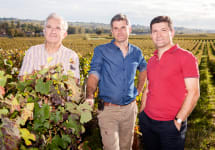
Château Saint Andre Corbin is located in Bordeaux’s smallest appellation just north of the village of Saint Emilion. Both the estate and vineyards date to the Gallo-Roman time. Letters from the Roman Consul and poet Ausonius to Rome indicate that wine from this estate was served at Julius Cesar’s table in the 4th century. Archaeological evidence suggests that the current château is built over the original Ausonius Villa (The famous Château Ausone did not exist prior to the 18th Century). Extensive archaeological excavations at Château Saint Andre Corbin have resulted in spectacular discoveries, including an intact Venus, which is in the Museum of Aquitaine in Bordeaux, and an intact Diana, which now resides in the Louvre Museum in Paris.
The property is owned by the dynamic Saby family who have been making wine on the right bank for 9 generations. Today, brothers Jean-Philippe and Jean-Christophe Saby, both of whom are experienced oenologists and agricultural engineers, own and manage the estate as well as numerous ones in the St. Emilion region of Bordeaux.

One of the world’s most classic and popular styles of red wine, Bordeaux-inspired blends have spread from their homeland in France to nearly every corner of the New World. Typically based on either Cabernet Sauvignon or Merlot and supported by Cabernet Franc, Malbec and Petit Verdot, the best of these are densely hued, fragrant, full of fruit and boast a structure that begs for cellar time. Somm Secret—Blends from Bordeaux are generally earthier compared to those from the New World, which tend to be fruit-dominant.

Marked by its historic fortified village—perhaps the prettiest in all of Bordeaux, the St-Émilion appellation, along with its neighboring village of Pomerol, are leaders in quality on the Right Bank of Bordeaux. These Merlot-dominant red wines (complemented by various amounts of Cabernet Franc and/or Cabernet Sauvignon) remain some of the most admired and collected wines of the world.
St-Émilion has the longest history in wine production in Bordeaux—longer than the Left Bank—dating back to an 8th century monk named Saint Émilion who became a hermit in one of the many limestone caves scattered throughout the area.
Today St-Émilion is made up of hundreds of independent farmers dedicated to the same thing: growing Merlot and Cabernet Franc (and tiny amounts of Cabernet Sauvignon). While always roughly the same blend, the wines of St-Émilion vary considerably depending on the soil upon which they are grown—and the soils do vary considerably throughout the region.
The chateaux with the highest classification (Premier Grand Cru Classés) are on gravel-rich soils or steep, clay-limestone hillsides. There are only four given the highest rank, called Premier Grand Cru Classés A (Chateau Cheval Blanc, Ausone, Angélus, Pavie) and 14 are Premier Grand Cru Classés B. Much of the rest of the vineyards in the appellation are on flatter land where the soils are a mix of gravel, sand and alluvial matter.
Great wines from St-Émilion will be deep in color, and might have characteristics of blackberry liqueur, black raspberry, licorice, chocolate, grilled meat, earth or truffles. They will be bold, layered and lush.