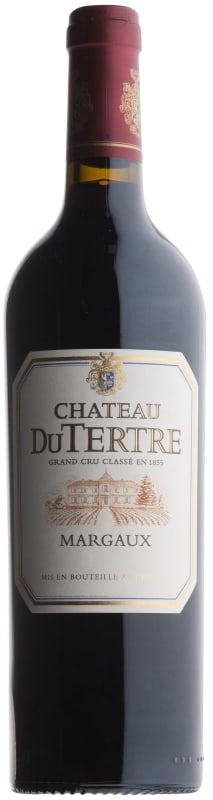


Winemaker Notes
Chateau du Tertre offers a wine in the style of Margaux, with the finesse and femininity that characterizes them. A silky and delicate wine.
Blend: 70% Cabernet Sauvignon, 15% Merlot, 11% Cabernet Franc and 4% Petit Verdot
Professional Ratings
-
James Suckling
Lovely fruit, with blackberry, dark chocolate, walnut and meat aromas and flavors. Medium-bodied with a solid core of fruit, creamy tannins and just a hint of chocolate. 70% cabernet sauvignon, 15% merlot, 11% cabernet franc and 4% petit verdot. Needs three or four years of bottle age.
-
Robert Parker's Wine Advocate
The 2023 Château du Tertre has turned out beautifully, revealing aromas of cassis, dark wild berries, rose petals and fresh licorice, accented by refined spice. Medium- to full-bodied, it is round and sapid, layered and deep, built around a fleshy core of fruit framed by velvety, powdery tannins and a gently sweet profile. This blend of 70% Cabernet Sauvignon, 15% Cabernet Franc, 11% Merlot and 4% Petit Verdot is a sleeper of the vintage.
-
Wilfred Wong of Wine.com
Over the years, Château du Tertre has been one of the most expressive interpretations of Margaux. The 2023 vintage is beguilingly spiced, offering inviting layers of red fruits, dried leaves, and subtle earthy nuance that linger gracefully on the palate. Its charm and versatility make it a natural partner at the table—especially with a luxe poke bowl crowned with crispy, caramelized cubes of Spam, soy-glazed rice, scallions, sesame, and a touch of chili heat. It’s a playful yet deeply satisfying match that lets the wine’s elegance shine. (Tasted: January 22, 2025, San Francisco, CA)
-
Jeb Dunnuck
Ripe cassis and darker fruits intermixed with spicy wood, graphite, liquid violets, and sappy flowers emerge from the 2023 Château Du Tertre, a deep plum/purple-hued effort that shows impressive complexity. Medium-bodied on the palate, it has solid mid-palate depth, ripe, polished tannins, nicely integrated acidity, and a great finish. Based on 70% Cabernet Sauvignon, 15% Merlot, 11% Cabernet Franc, and 4% Petit Verdot and aged 14 to 16 months in 60% new French oak, this youthful Margaux deserves 4-5 years in the cellar and should have a solid two decades or more of overall longevity.
-
Wine Spectator
A flattering red, with a caressing feel to its red and black cherry compote notes, while violet and iris add range. Judicious toast lets smoldering alder and savory flecks peek in gently on the finish. Cabernet Sauvignon, Cabernet Franc, Merlot and Petit Verdot.


One of the world’s most classic and popular styles of red wine, Bordeaux-inspired blends have spread from their homeland in France to nearly every corner of the New World. Typically based on either Cabernet Sauvignon or Merlot and supported by Cabernet Franc, Malbec and Petit Verdot, the best of these are densely hued, fragrant, full of fruit and boast a structure that begs for cellar time. Somm Secret—Blends from Bordeaux are generally earthier compared to those from the New World, which tend to be fruit-dominant.

Silky, seductive and polished are the words that characterize the best wines from Margaux, the most inland appellation of the Médoc on the Left Bank of Bordeaux.
Margaux’s gravel soils are the thinnest of the Médoc, making them most penetrable by vine roots—some reaching down over 23 feet for water. The best sites are said to be on gentle outcrops, or croupes, where more gravel facilitates good drainage.
The Left Bank of Bordeaux subscribes to an arguably outdated method of classification but it is nonetheless important in regards to history of the area. In 1855 the finest chateaux were deemed on the basis of reputation and trading price—at that time. In 1855, Chateau Margaux achieved first growth status, yet it has been Chateau Palmer (officially third growth from the 1855 classification) that has consistently outperformed others throughout the 20th century.
Chateau Margaux in top vintages is capable of producing red Cabernet Sauvignon based wines described as pure, intense, spell-binding, refined and profound with flavors and aromas of black currant, violets, roses, orange peel, black tea and incense.
Other top producers worthy of noting include Chateau Rauzan-Ségla, Lascombes, Brane-Cantenac, and d’Issan, among others.
The best wines of Margaux combine a deep ruby color with a polished structure, concentration and an unrivaled elegance.