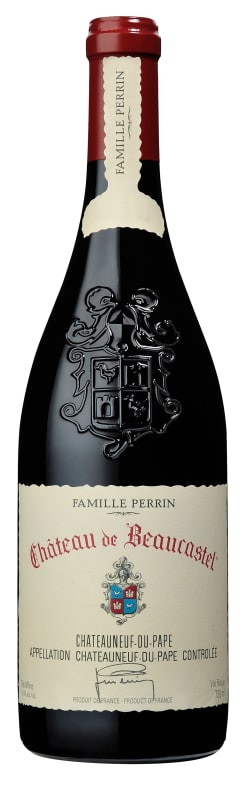


Winemaker Notes
This wine shows a magnificent deep red color with purple undertones. The nose is both subtle and aromatically rich, offering a refined balance of ripe fruit, freshness, and delicate spice. On the palate, it is elegant, ample, and silky, opening with a spicy note of garrigue before unfolding into a seamless harmony of fine tannic structure and supple roundness. The long, lingering finish highlights its impressive potential for aging.
Blend: 30% Grenache, 30% Mourvèdre, 15% Syrah, 10% Counoise, 10% Vaccarèse, Terret Noir, Muscardin, Clairette, Picpoul, Picardan, Bourboulenc, Roussanne 5% Cinsault
Professional Ratings
-
Decanter
A deep, quite herbal expression, with liquorice and crushed blueberries to the cassis fruit. Full-bodied, powerfully fruited, dense and deep. Really mouthcoating, intense fruit. The tannins are ripe, fine and plentiful, all saturated in blackberry juice on a long finish. Certainly one of the more successful Châteauneufs this year. Will age well. A Mourvèdre-led expression of Beaucastel - it contains more than usual, at least 35% and probably more. Grenache and Cinsault fermented in cement, Syrah and Mourvèdre fermented in foudre.
-
Jeb Dunnuck
Including more Mourvèdre than usual (40%), the 2021 Châteauneuf Du Pape sports a deep ruby/purple hue as well as an utterly classic Beaucastel nose of ripe red and blue fruits, spice, game, truffly earth, and ground pepper. Reminding me of the 2012, it's medium to full-bodied, has a layered, concentrated md-palate, sweet tannins, and a great finish.
-
James Suckling
Still a little closed, so the fruit is a bit reserved, but there are already meaty, lavender and rosemary aromas. Well-structured and crisp, the tannins building steadily as it flows over the palate. The concentrated and ripe red fruit is very deftly wrapped around the core. Long, spicy, and licorice finish.
-
Robert Parker's Wine Advocate
The 2021 Chateauneuf du Pape ratchets up the intensity from the Coudelet, adding more pronounced Mourvèdre-derived notes of truffle and tree bark to go with ripe black cherries and plums, crushed stone and hints of dark chocolate. Full-bodied in the mouth, with ample concentration and richness, this gently tannic wine finishes long and velvety, with echoes of licorice and dark fruit. It's a standout from a difficult vintage.
-
Wine Spectator
Toasty, meaty and inviting, this fresh red shows an understated, savory side, with notes of singed spices, mesquite, wet earth and fresh tobacco leaf flanking a silky range of plum and warm cherry compote flavors. This channels its terroir, with a round feel held in check by refined tannins, while the finish is lined with cool minerality and heavy iron. Grenache, Cinsault, Syrah, Mourvèdre, Counoise, Vaccarèse, Terret Blanc, Muscardin, Clairette, Picpoul de Pinet, Bourboulenc, Picardan and Roussanne.
-
Vinous
Bottled in June 2023, the 2021 Châteauneuf-du-Pape ended up slightly below my initial assessment from barrel last year. Nonetheless, it presents a distinctively elegant and refreshing character that’s neatly defined by ripe black cherry, licorice, violet, strawberry and meaty traces. Round tannins neatly frame this savory and polished red that offers highly enjoyable drinking right out of the gate.


With bold fruit flavors and accents of sweet spice, Grenache, Syrah and Mourvèdre form the base of the classic Rhône Red Blend, while Carignan, Cinsault and Counoise often come in to play. Though they originated from France’s southern Rhône Valley, with some creative interpretation, Rhône blends have also become popular in other countries. Somm Secret—Putting their own local spin on the Rhône Red Blend, those from Priorat often include Merlot and Cabernet Sauvignon. In California, it is not uncommon to see Petite Sirah make an appearance.

Famous for its full-bodied, seductive and spicy reds with flavor and aroma characteristics reminiscent of black cherry, baked raspberry, garrigue, olive tapenade, lavender and baking spice, Châteauneuf-du-Pape is the leading sub-appellation of the southern Rhône River Valley. Large pebbles resembling river rocks, called "galets" in French, dominate most of the terrain. The stones hold heat and reflect it back up to the low-lying gobelet-trained vines. Though the galets are typical, they are not prominent in every vineyard. Chateau Rayas is the most obvious deviation with very sandy soil.
According to law, eighteen grape varieties are allowed in Châteauneuf-du-Pape and most wines are blends of some mix of these. For reds, Grenache is the star player with Mourvedre and Syrah coming typically second. Others used include Cinsault, Counoise and occasionally Muscardin, Vaccarèse, Picquepoul Noir and Terret Noir.
Only about 6-7% of wine from Châteauneuf-du-Pape is white wine. Blends and single-varietal bottlings are typically based on the soft and floral Grenache Blanc but Clairette, Bourboulenc and Roussanne are grown with some significance.
The wine of Chateauneuf-du-Pape takes its name from the relocation of the papal court to Avignon. The lore says that after moving in 1309, Pope Clément V (after whom Chateau Pape-Clément in Pessac-Léognan is named) ordered that vines were planted. But it was actually his successor, John XXII, who established the vineyards. The name however, Chateauneuf-du-Pape, translated as "the pope's new castle," didn’t really stick until the 19th century.