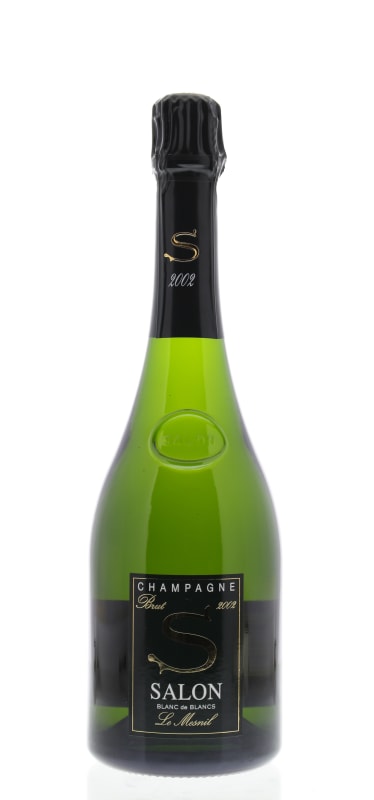


Winemaker Notes
The Salon 2002 will pair perfectly with scallops, sweetbreads with a small piece of molten parmesan, light fish dishes simply served.Oysters, lobster, pheasant, capon with light mushroom sauce and dark rice.
Professional Ratings
-
Decanter
An almost ideal growing season with no periods of extreme weather, ending with a cool but sunny September. Harvest began on 16 September. The very classy nose has a mineral-infused character underlying its spicy, floral scents. This Salon has the power to be long-lived and the freshness and vivacity to be already enjoyable, but also to be an ideal companion for a gastronomic meal. Perfection.
-
James Suckling
One of the greatest modern Champagnes ever. The aromas are so seductive with brioche, apple tart, and flint underneath it all. Chalk and hints of metal shavings develop a minerally essence. It's full-bodied and yet tight in the center palate. The power and intensity is mesmerizing. It goes on for minutes. It's so enjoyable and intellectually stimulating to taste and it can go for decades ahead. A perfect Champagne in every way.
-
Wine Enthusiast
The 35th and most recent vintage of Salon since the house was founded in 1905 is memorable and magnificent. Made only from Chardonnay grown in the Grand Cru village of Le Mesnil-sur-Oger, it combines intense minerality, a crisp textured core and the beginnings of maturity. The depths of this wine, with its layers of fruit and steeliness, are superb. Even after 12 years, it still needs to age further. Drink from 2018.
-
Wilfred Wong of Wine.com
One of the most amazing experiences of my life, not only because the Champagne was simply out of this world, but that I poured a glass for my niece Natalie for her 21st birthday. She had no idea that this wine is one of greatest gifts to the wine world. Maybe when she is as old as I am, she will recall the moment? The 2002 Salon is simply remarkable and underscores just how magnificent the Champagne region of France is, this was a timeless moment as I savored this glass. Medium straw, light yellow color; beautiful ripe apple aroma, with a hint of yeastiness; quite precise and luxurious, incredibly elegant, frisky and super alive; medium bodied, rich, layered and stylish on the palate; dry, fine acidity, well balanced; excellent super-young flavors of ripe apple and light yeastiness; long finish, subtle layers in the aftertaste. One of the best wines, I have ever enjoyed. Perhaps I could have waited another 10 years before popping the cork. (Tasted: November 27, 2014, San Francisco, CA)
-
Wine Spectator
There's vibrancy and a sense of finesse to this rich and creamy Champagne, which is defined by racy acidity and a streak of chalky minerality. Offers an expansive palate of glazed apricot, oyster shell, toasted almond and spun honey flavors, accented by hints of ground ginger, dried lemon peel and marzipan. The finish is racy and persistent. Drink now through 2030.


Representing the topmost expression of a Champagne house, a vintage Champagne is one made from the produce of a single, superior harvest year. Vintage Champagnes account for a mere 5% of total Champagne production and are produced about three times in a decade. Champagne is typically made as a blend of multiple years in order to preserve the house style; these will have non-vintage, or simply, NV on the label. The term, "vintage," as it applies to all wine, simply means a single harvest year.

Associated with luxury, celebration, and romance, the region, Champagne, is home to the world’s most prized sparkling wine. In order to bear the label, ‘Champagne’, a sparkling wine must originate from this northeastern region of France—called Champagne—and adhere to strict quality standards. Made up of the three towns Reims, Épernay, and Aÿ, it was here that the traditional method of sparkling wine production was both invented and perfected, birthing a winemaking technique as well as a flavor profile that is now emulated worldwide.
Well-drained, limestone and chalky soil defines much of the region, which lend a mineral component to its wines. Champagne’s cold, continental climate promotes ample acidity in its grapes but weather differences from year to year can create significant variation between vintages. While vintage Champagnes are produced in exceptional years, non-vintage cuvées are produced annually from a blend of several years in order to produce Champagnes that maintain a consistent house style.
With nearly negligible exceptions, . These can be blended together or bottled as individual varietal Champagnes, depending on the final style of wine desired. Chardonnay, the only white variety, contributes freshness, elegance, lively acidity and notes of citrus, orchard fruit and white flowers. Pinot Noir and its relative Pinot Meunier, provide the backbone to many blends, adding structure, body and supple red fruit flavors. Wines with a large proportion of Pinot Meunier will be ready to drink earlier, while Pinot Noir contributes to longevity. Whether it is white or rosé, most Champagne is made from a blend of red and white grapes—and uniquely, rosé is often produce by blending together red and white wine. A Champagne made exclusively from Chardonnay will be labeled as ‘blanc de blancs,’ while ones comprised of only red grapes are called ‘blanc de noirs.’