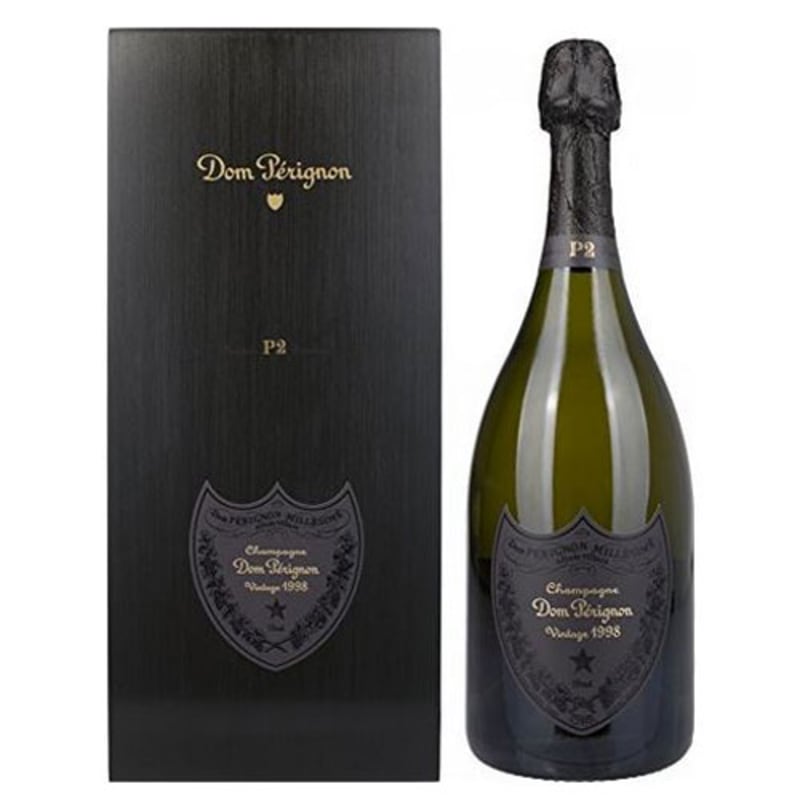

Winemaker Notes
Professional Ratings
-
Wilfred Wong of Wine.com
Let us be clear about this: There is one and only one Dom Perignon and one place in the world called Champagne. With more than three centuries of history, this one spot—Champagne, about an hour's drive east of Paris—has provided the wine industry with some of the richest traditions and continues to teach us about not just sparkling wines but about all wines. Two years ago, Dom Pérignon released the 1998 P2. The "P" stands for plentitude and is how the winery differentiates three distinct aging levels of its Champagnes. The 1998 P2 is the middle of three—one is the "normal" release and P3 would be the final. While I received plenty of advance information on the historic release of P2, I did not fully conceptualize it until I sniffed and tasted. This is an amazing wine. Complex and seamless, there is no rational explanation of this wine, except that it stands on its own plane. For those who like descriptors, the wine begins with a seamless and steady stream of pinpoint bubbles, flows onto the palate with delicate apples, light flowers, and faint bread yeast, and finishes with a crescendo of fresh earth. The 1998 Dom Pérignon is not just for those who love Champagne, the wine is something all wine lovers must experience. The wine has reached its apex and is ready to enjoy now. Find a friend and toast to life! (Best Served: Now to 2025) (Tasted: August 24, 2015, San Francisco, CA)
-
James Suckling
Decadent and rich DP with so much pie crust, white truffle and dried apple and pineapple character. Limestone too. Full body, layered and flavorful. Lovely texture of fine bubbles. Very rich at the end but then turns fresh and vibrant. Contrast now between ripe fruit and fresh acidity.
-
Wine & Spirits
From a late harvest saved by fine fall weather, this 1998 is part of new prognram at Dom Perignon, released after extended aging on the lees, disgorged when Richard Geoffroy considers the wine to be reaching its second peak of development-a least 12 years on the lees,or, in the case of this wine, 13. This has aged into a dynamic and sexy wine, layering floral intensity, silken textures and bass notes of fresh, nutty, loquant-like flavors into a finish with tremendous drive. It's open and packed with energy.
-
Wine Spectator
This vibrant Champagne is tightly knit up front, with a dense core of smoky minerality and ripe dried apricot and white cherry flavors. Expands on the satiny palate, revealing accents of pastry cream, toast, singed orange peel and toasted coconut that echo on the persistent finish. Drink now through 2028.


Dom Pérignon: an absolute commitment to Vintage
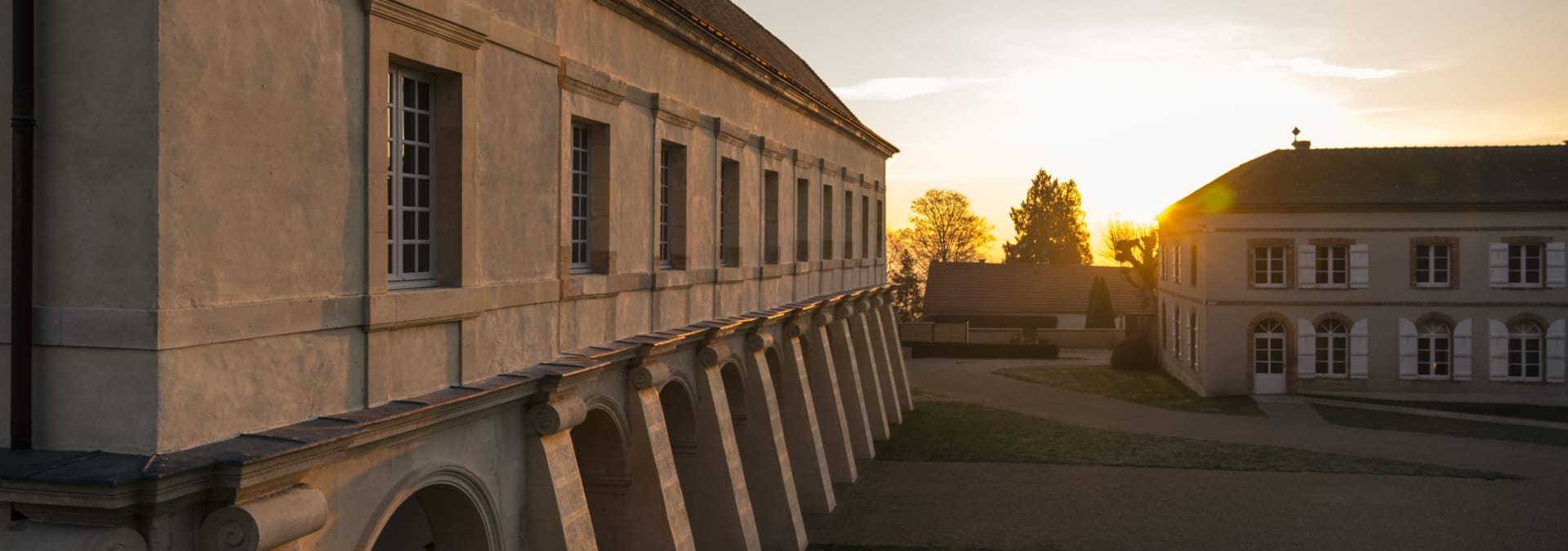
Dom Pérignon's commitment to vintage is absolute. Each Dom Pérignon is a true act of creation, made from only the best grapes. The champagne's intensity is based in precision, so inviting, so mysterious. Each Vintage has three Plénitudes, and embodies the total faith in the creation that is constantly renewed by Chef de Cave Vincent Chaperon. Coupled with a bold sense of playfulness, Dom Pérignon inspires the greatest creators in the world.Made only from the best grapes grown in one single year, each Dom Perignon's Vintage represents a harmonic balance between the nature of the year and the signature of Dom Pérignon. After no fewer than 8 years of elaboration, each vintage emerges complete, seamless and tactile. Dom Pérignon Champagne is made through an assemblage of Pinot Noir and Chardonnay, created by using only the best grapes harvested from the 17 Grands Crus in Champagne and the Premier Cru of Hautvillers.

Representing the topmost expression of a Champagne house, a vintage Champagne is one made from the produce of a single, superior harvest year. Vintage Champagnes account for a mere 5% of total Champagne production and are produced about three times in a decade. Champagne is typically made as a blend of multiple years in order to preserve the house style; these will have non-vintage, or simply, NV on the label. The term, "vintage," as it applies to all wine, simply means a single harvest year.

Associated with luxury, celebration, and romance, the region, Champagne, is home to the world’s most prized sparkling wine. In order to bear the label, ‘Champagne’, a sparkling wine must originate from this northeastern region of France—called Champagne—and adhere to strict quality standards. Made up of the three towns Reims, Épernay, and Aÿ, it was here that the traditional method of sparkling wine production was both invented and perfected, birthing a winemaking technique as well as a flavor profile that is now emulated worldwide.
Well-drained, limestone and chalky soil defines much of the region, which lend a mineral component to its wines. Champagne’s cold, continental climate promotes ample acidity in its grapes but weather differences from year to year can create significant variation between vintages. While vintage Champagnes are produced in exceptional years, non-vintage cuvées are produced annually from a blend of several years in order to produce Champagnes that maintain a consistent house style.
With nearly negligible exceptions, . These can be blended together or bottled as individual varietal Champagnes, depending on the final style of wine desired. Chardonnay, the only white variety, contributes freshness, elegance, lively acidity and notes of citrus, orchard fruit and white flowers. Pinot Noir and its relative Pinot Meunier, provide the backbone to many blends, adding structure, body and supple red fruit flavors. Wines with a large proportion of Pinot Meunier will be ready to drink earlier, while Pinot Noir contributes to longevity. Whether it is white or rosé, most Champagne is made from a blend of red and white grapes—and uniquely, rosé is often produce by blending together red and white wine. A Champagne made exclusively from Chardonnay will be labeled as ‘blanc de blancs,’ while ones comprised of only red grapes are called ‘blanc de noirs.’