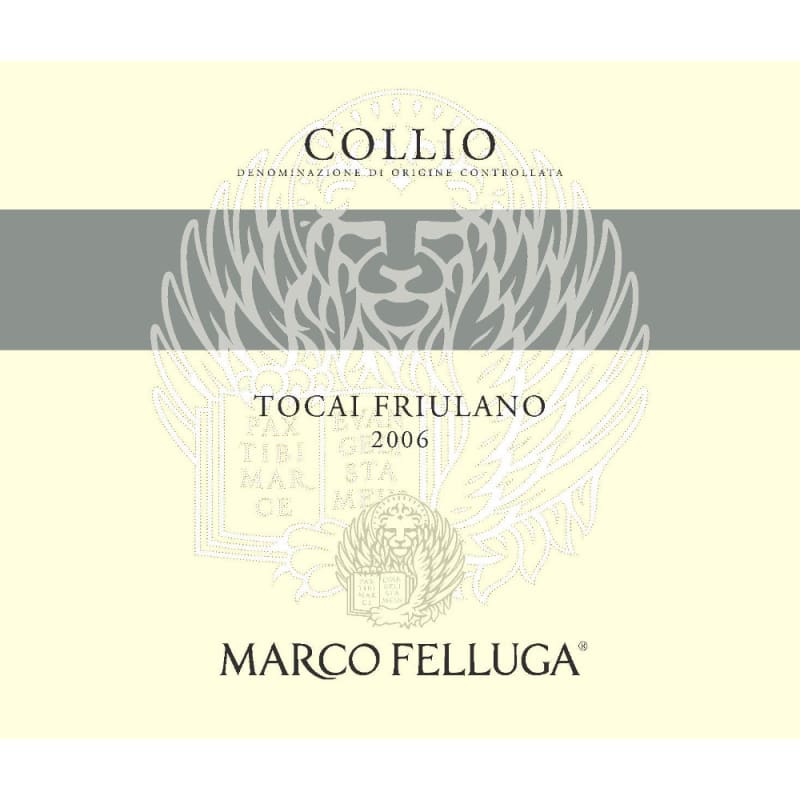

Winemaker Notes
Excellent with all types of fish. It also nicely accompanies risottos and all first course dishes.
Professional Ratings
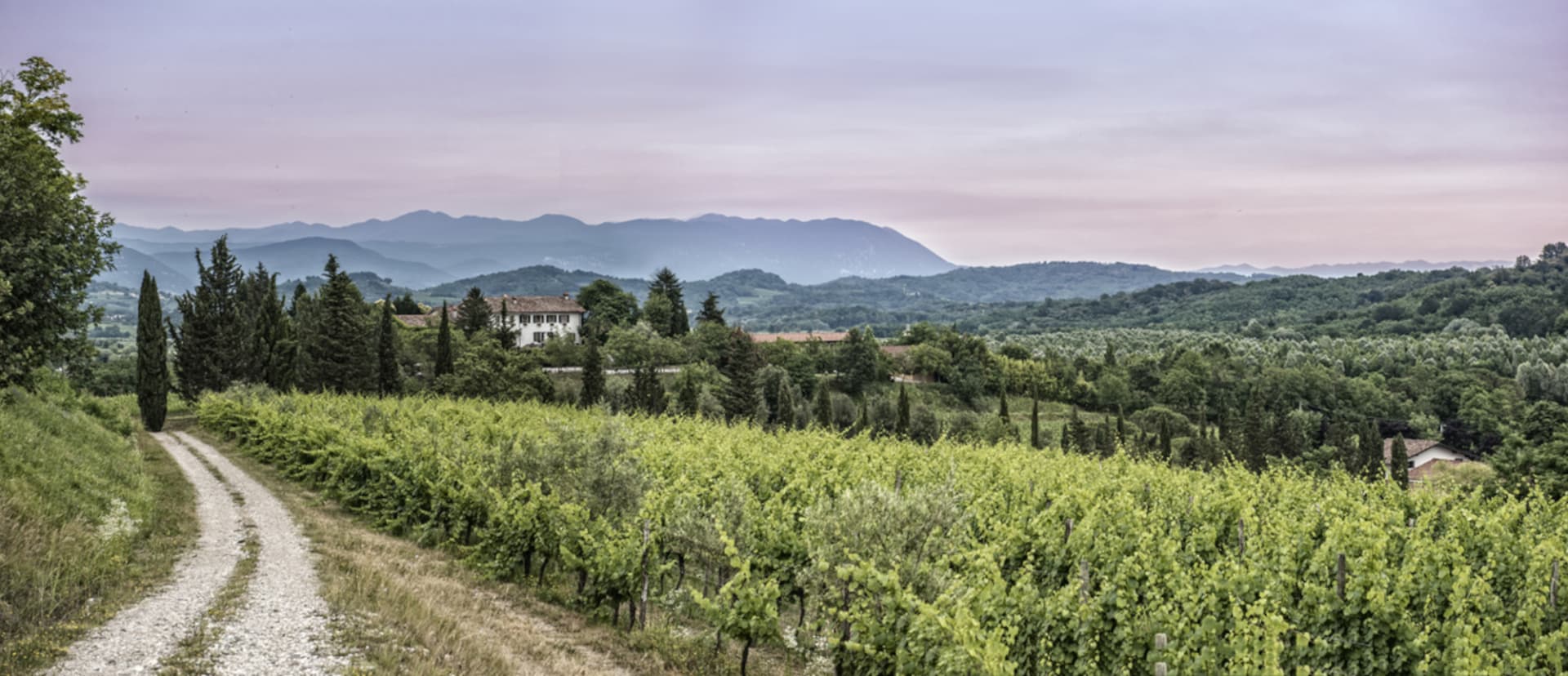


The Marco Felluga family traces its wine-industry lineage to the late 1800s, when Ilaria Felluga's great-great-great-grandfather, Michele, started a business buying and selling wine in Istria (then part of the Austro-Hungarian Empire). Michele's son Marco added winemaking to the business, growing grapes and making some wine on the family farm just south of Trieste in what is now southwestern Slovenia. After World War I, Marco's son Giovanni continued the family wine trade, selling Istrian wine in Trieste and in Grado in southern Friuli. He also opened a cellar in Gradisca d'Isonzo in Collio in 1938, but World War II soon broke out, disrupting life for a decade. After the war, Istria became part of Soviet-dominated Yugoslavia; the family lost their farm there, and Collio became their home.
Two of Giovanni's seven children ultimately established wineries nearby. After graduating from the enology school in Conegliano, Marco Felluga worked for his older brother, Livio, before Livio started his own winery in Rosazzo. Marco stayed in Gradisca d'Isonzo and founded his winery in 1956. In 1967, he acquired the Russiz Superiore estate in Capriva del Friuli, which continues to operate as a separate winery. The Marco Felluga estate has vineyards in four parts of the Collio—Farra d'Isonzo, San Floriano del Collio, Oslavia, and Cormòns—allowing strategic grape selection. About 75% of production is white wine from international and local varieties. Russiz Superiore has 50 ha of vines, mainly from single vineyard lots, with some white wines vinified in oak.
In the 1990s, Marco's son Roberto began managing both estates, officially taking over in 2000, improving quality through sustainable viticulture. In 2017, his daughter Ilaria joined after studying viticulture and enology. Roberto died unexpectedly in 2021, and Marco in 2024, leaving Ilaria to manage the estates. The Tommasi Family partnered with her, aiming to preserve and enhance Collio's wine heritage. Today, Ilaria leads both estates, focusing on sustainability and high-quality wines, gaining recognition for her personality and deep knowledge of Friuli and her family's legacy.

Thriving in the NE Italian region of Friuli-Venezia Giulia near the border of Slovenia, Friulano makes a uniquely high-pitched and vibrant white with a delicate perfume. Extensive in the area by the early 1930s, today Friulano grows in all of the best zones and is usually, but not always, bottled as a single-varietal wine. Somm Secret— The Friulano grown today, while named for its present home of Friuli, is actually the Sauvignonasse grape, a minor cultivar that came from Bordeaux.

Viticulture has thrived in Colli Orientali del Friuli since the reign of ancient Rome and today its verdant, rolling hills support a long list of autochthonous varieties, each playing a unique and important role in the modern Colli Orientali wine scene.
The region is primarily recognized for its white wines. Its indigenous varieties of Ribolla Gialla, Verduzzo, Picolit and perhaps most importantly, Friulano are made into single varietal wines or blended, and often blended with the international varieties of Sauvignon blanc, Pinot grigio and Pinot bianco. The latter have been flourishing in the area since the 1800s. But it wasn’t until the 1970s when producers started using cold fermentation techniques to produce fresh, fruity, crisp and aromatic whites that this area began to attract international attention.
While reds only make up about a third of the area under vine, Colli Orientali is home to some of Italy’s most exciting and rare red wines. Refosco, Schioppettino, Tazzelenghe and Pignolo are among the autochthonous varieties while Merlot, Cabernet Sauvignon and Pinot Noir also have a stronghold.
Colli Orientali holds much in common with its neighbor, Collio; the only thing dividing them is a political line. Both are influenced by the cooling effects of the Julian Alps and moderated by the Adriatic Sea. A unique soil of alternating marine layers called flysch also dominates Colli Orientali, providing a mineral-rich environment for vine roots and optimal water drainage.